



When Acoustics Become Architecture: Designing Sound for How Spaces Are Used
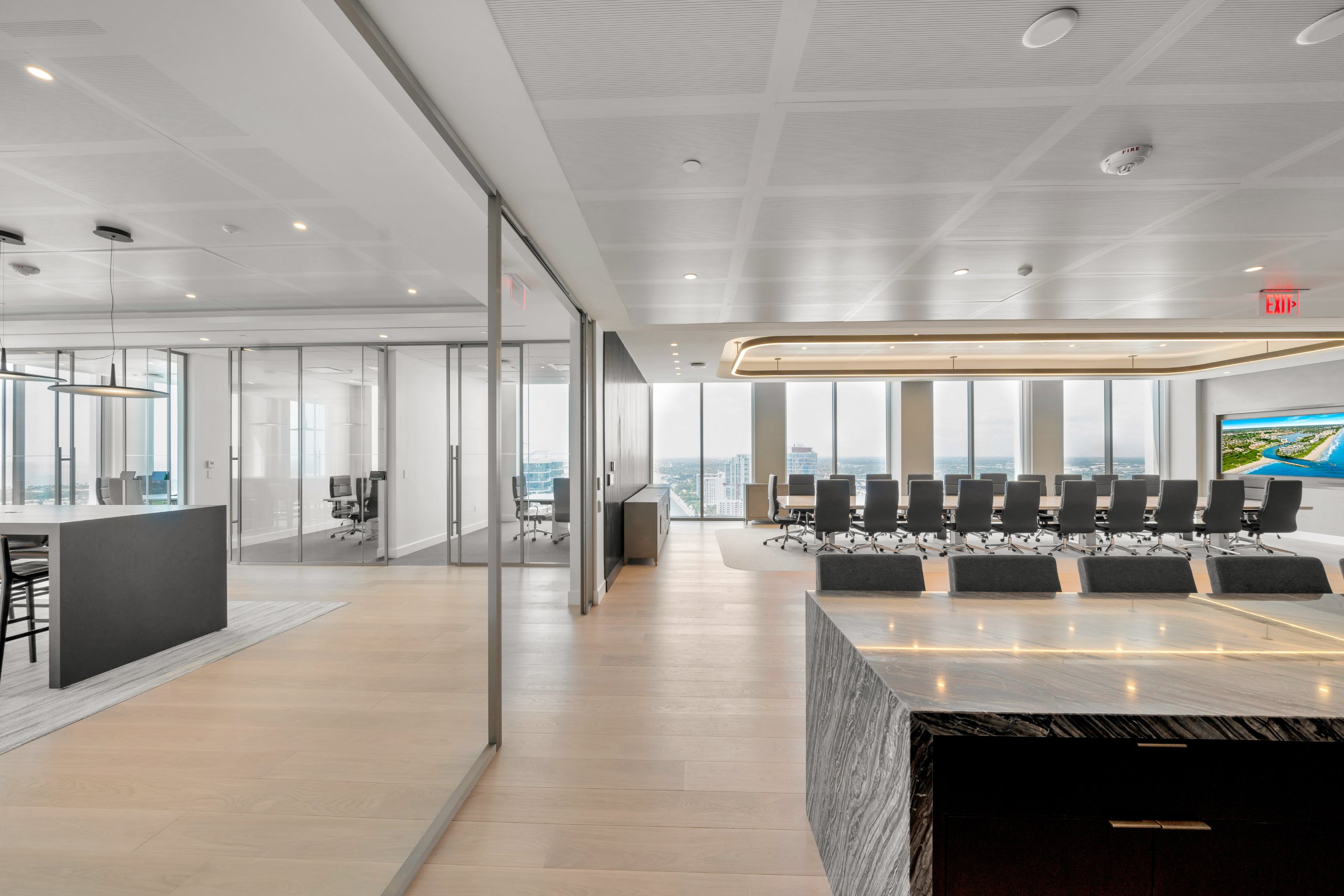
In contemporary interiors, sound is no longer a secondary concern – or something addressed after the walls are built and the furniture is installed. As spaces become more open, flexible, and visually expressive, architectural acoustics has emerged as a core architectural consideration. It shapes how people focus, collaborate, learn, and connect, often influencing the success of a space as much as light, layout, or material palette.
Architects and interior designers are increasingly asked to deliver environments that support multiple modes of use within a single footprint. Offices host focused work, informal meetings, and social gatherings. Learning environments shift between lecture, collaboration, and independent study. Hospitality and civic interiors balance energy with comfort. In all of these contexts, architectural acoustics must do more than reduce noise – it must actively support how spaces are used, perceived, and experienced.
This shift has elevated acoustics from a technical requirement to a design opportunity. When integrated early and thoughtfully, sound becomes part of the architectural language itself, shaping spaces that feel intentional, balanced, and human-centered.
Acoustics as Architectural Language
For much of the past century, acoustics were treated as a corrective measure. When a space sounded bad – too loud, too echoey, too distracting – acoustic panels were added as a fix. These treatments often appeared visually disconnected from the architecture, applied late in the process and rarely considered part of the design narrative.
Today, that mindset is changing. Acoustic design strategy is increasingly embedded in the earliest stages of planning, alongside decisions about form, circulation, and materiality. Rather than reacting to acoustic problems, designers are using sound as a design driver within acoustics and architecture – one that influences spatial organization, surface articulation, and material selection from the start.
This evolution reflects a broader convergence of form, light, texture, and sound. Just as daylighting strategies shape volumes and openings, acoustic considerations inform surface geometry, ceiling planes, and spatial proportions. Textured acoustic surfaces are no longer viewed as purely functional; they contribute depth, rhythm, and visual interest. Sculptural acoustic elements introduce identity and movement, reinforcing the idea that performance and expression can coexist.
Crucially, this approach moves away from static, one-size-fits-all treatments. Instead, acoustics are understood as adaptive architectural elements – responsive to how a space is used over time, and flexible enough to support changing needs without compromising design integrity.
The Contemporary Challenge: Spaces That Refuse to Sit Still
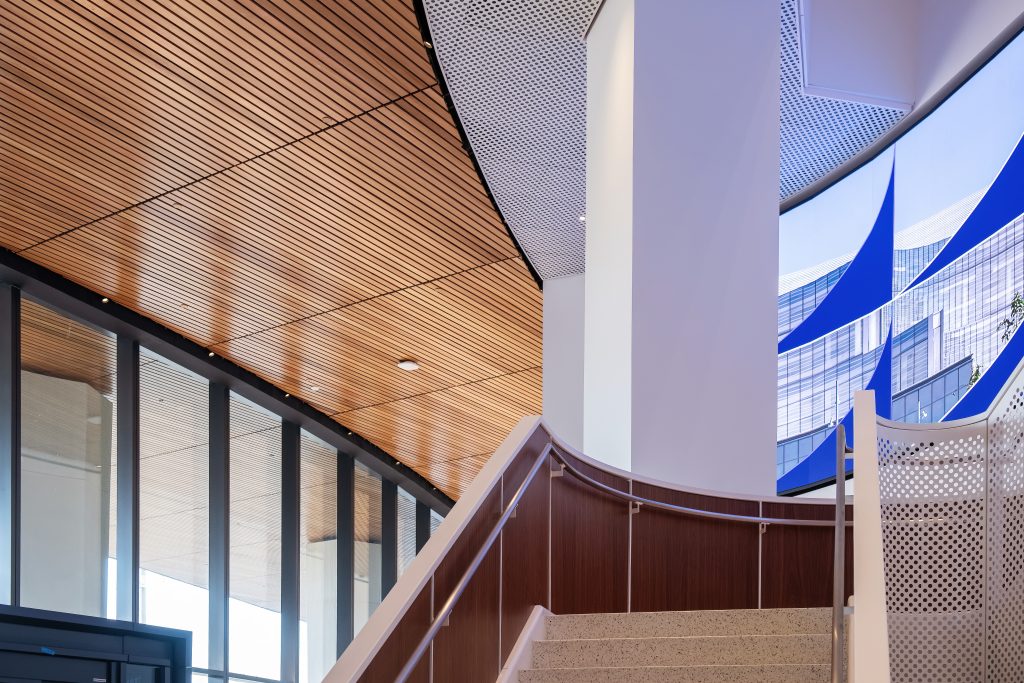
Modern interiors are defined by versatility. Open-plan offices, learning environments, hospitality venues, and civic interiors are rarely designed for a single, fixed purpose. A space that hosts quiet individual work in the morning may support collaboration or public events in the afternoon. This demand for adaptability places significant pressure on traditional acoustic approaches.
Open layouts prioritize visual connection and daylight, but they also introduce challenges related to open space acoustics, speech intelligibility, and acoustic privacy. Walls alone are no longer sufficient to manage sound in these environments. Noise travels freely across large volumes, and without thoughtful intervention, reverberation builds quickly, increasing cognitive load and reducing acoustic comfort at work.
The challenge is not simply noise reduction – it’s balance. Designers must navigate the tension between openness and control, transparency and separation. In learning environments, this balance directly affects comprehension and engagement. Learning environment acoustics influence how clearly students hear instruction, how easily they collaborate, and how fatigued they feel over the course of a day. In commercial interior acoustics more broadly, poorly managed sound can undermine productivity, wellbeing, and overall satisfaction.
Addressing these challenges requires a shift in perspective. Sound must be managed vertically, overhead, and spatially – not just laterally. Acoustic solutions need to engage the full volume of a space, recognizing that sound behaves three-dimensionally, filling rooms rather than traveling neatly from point to point.
From Panels to Systems: A Shift in Acoustic Thinking
As spatial complexity has increased, so too has the need for more holistic acoustic solutions. Rather than relying on isolated panels applied to select walls, designers are embracing integrated acoustic systems that coordinate performance across surfaces and scales.
This systems-based approach considers walls supported by acoustic panels for walls, ceilings, and architectural features as part of a unified acoustic framework. Sound absorption materials are distributed thoughtfully throughout the space, creating consistent reverberation control while supporting varied activities. Ceiling-based acoustic solutions work in concert with vertical surfaces, ensuring that no single plane carries the full burden of absorption.
Performance metrics such as NRC values and absorption coefficients remain important, but they are increasingly framed through human outcomes rather than technical benchmarks alone. The real measure of success lies in improved speech intelligibility, reduced distraction, and enhanced acoustic comfort. When acoustics function as infrastructure – supporting focus, collaboration, and wellbeing – they become an invisible but essential layer of the architecture.
This shift also aligns with the growing emphasis on adaptable interior spaces. Modular acoustic solutions allow designers to respond to evolving programmatic needs without reworking the entire interior. By treating acoustics as a system rather than a product, spaces gain resilience and longevity.
The Ceiling as the Primary Acoustic Canvas
Among all architectural surfaces, ceilings offer the greatest opportunity for acoustic impact – and remain one of the most underutilized. In large, open interiors, sound pressure fills the room uniformly. Reverberation is not confined to first reflection points; it accumulates throughout the volume. As a result, the location of absorption plays a critical role in managing overall acoustic performance.
Ceilings — enhanced with acoustic ceiling panels — provide expansive, unobstructed surface area that can be treated evenly across a space. Unlike walls, they are not interrupted by doors, windows, or artwork. This allows designers to spread absorption more consistently, achieving effective reverberation control while maintaining visual balance. From an aesthetic standpoint, ceiling planes can unify a space, reinforcing rhythm and proportion.
When approached intentionally, ceilings become active design features rather than background surfaces. Variations in depth, texture, and articulation introduce three-dimensional acoustic design that enhances both performance and perception. By shaping ceiling geometry, designers can influence how sound dissipates, while also creating dynamic interactions between light and shadow.
Importantly, ceiling-based acoustic solutions support multi-use spaces without imposing visual clutter at eye level. They preserve openness and transparency, allowing spaces to remain flexible and inviting while quietly managing sound overhead.
Texture, Depth, and Dimensionality: Sound You Can See
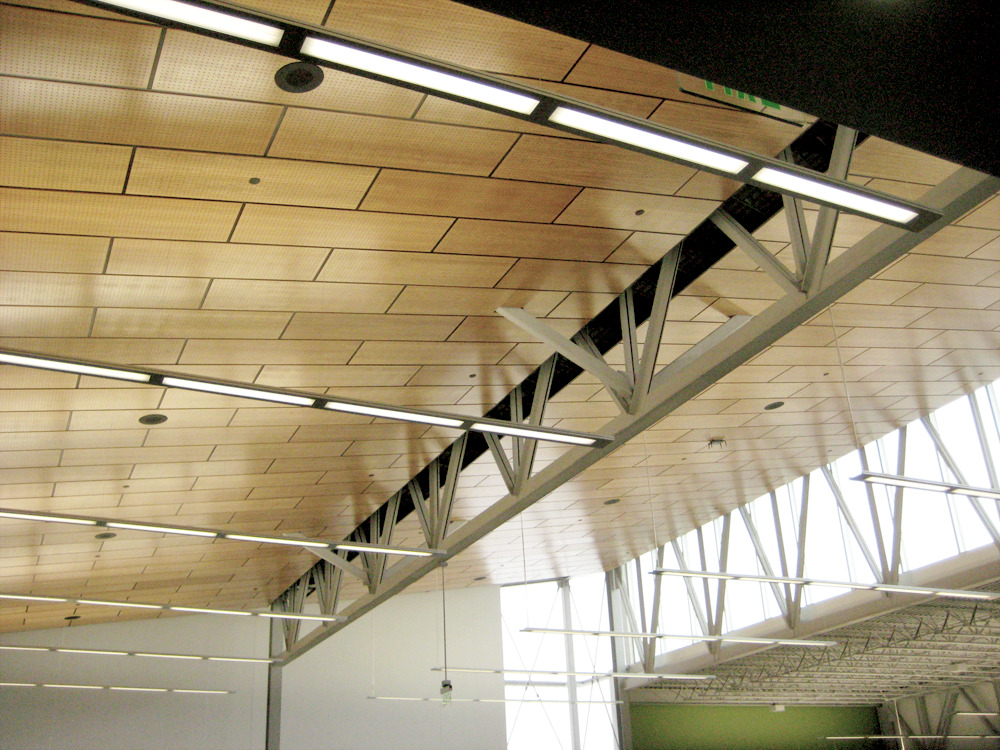
Acoustics are often described in technical terms, but their impact is deeply sensory. Texture, depth, and material relief influence not only how sound behaves, but how a space feels. Three-dimensional surfaces such as perforated wood acoustic panels increase surface area and create air gaps that enhance absorption, improving performance without relying on excessive material thickness.
Textured acoustic surfaces introduce tactility into interiors, aligning acoustics with broader trends in sensory interior design. These surfaces engage more than just the ear; they invite visual exploration and reinforce spatial identity. Sculptural acoustic elements, when integrated thoughtfully, become markers of place – expressing character while serving a functional purpose.
The interaction between light and form further amplifies this effect. As daylight and artificial lighting graze textured surfaces, shadows shift throughout the day, animating the space. This dynamic quality reinforces the idea that acoustics are not static treatments, but living components of the interior environment.
By embracing tactile interior materials and expressive geometry, designers can create environments where sound control and aesthetic ambition reinforce one another, rather than competing for attention.
Sustainability as an Integrated Design Requirement
Sustainability is now a baseline expectation in architectural practice, and acoustic materials are no exception. Designers are increasingly attentive to the environmental and health impacts of the products they specify, seeking wood fiber acoustic panels and other sustainable acoustic materials that align with broader sustainability goals without compromising performance.
Many contemporary acoustic systems incorporate recycled content acoustics, which are manufactured using processes that reduce environmental impact. Low-VOC interior product options contribute to healthier indoor air quality, supporting occupant wellbeing alongside acoustic comfort. Transparency through EPD and Declare certified materials helps designers make informed decisions, even as product data varies across the market.
At the same time, sustainability extends beyond material composition. Longevity and adaptability are critical considerations. Acoustic systems that can be reconfigured or relocated as spaces evolve reduce waste and extend product life cycles. By supporting adaptable interior spaces, acoustic design contributes to long-term environmental responsibility.
Rather than positioning sustainability as a marketing claim, leading designers approach it as an integrated design responsibility – one that balances performance, health, and durability in equal measure.
Human Experience at the Center of Acoustic Design
Ultimately, the value of acoustics lies in how people experience space. Poor sound environments increase stress, particularly in noise-sensitive spaces, reduce focus, and undermine connection. Thoughtful acoustic design, by contrast, supports emotional and cognitive wellbeing.
Acoustic comfort is closely tied to cognitive load. When reverberation is uncontrolled or background noise is excessive, the brain works harder to process information, leading to fatigue. In workplaces, this directly affects acoustic comfort at work, influencing productivity and satisfaction. In educational settings, it impacts comprehension and engagement.
Balancing speech clarity and acoustic privacy is a central challenge. Spaces must allow communication without broadcasting every conversation. In open environments, this balance shapes how safe and comfortable people feel sharing ideas, collaborating, or concentrating.
By anchoring acoustic decisions to human outcomes – calm, focus, clarity, and connection – designers move beyond metrics and toward experiences. Sound becomes an intentional component of sensory interior design, reinforcing the emotional tone of a space.

Designing with Architectural Acoustic Systems
As acoustic solutions become more integrated and architectural, collaboration becomes increasingly important. Working with a systems-focused acoustic partner allows designers to coordinate wall and ceiling strategies holistically, ensuring performance goals align with design intent through clear acoustic specifications.
Early engagement is key. When acoustic considerations are introduced during conceptual design, they can inform spatial organization, surface articulation, and material selection – reducing the need for compromises later. Customization, performance validation, and design support help translate abstract goals into buildable solutions.
ASI Architectural exemplifies this collaborative approach. By focusing on integrated acoustic systems rather than isolated products, our team supports architects and specifiers throughout the design process. Just as importantly, we bring a level of responsiveness and expertise that helps projects move forward smoothly – answering questions, providing guidance, and ensuring continuity from concept through installation.
This partnership-oriented model reflects the broader shift in architectural acoustics: from add-on treatments to embedded design intelligence.
When Sound Becomes Part of the Architecture
As interiors continue to evolve, the line between acoustics and architecture will only grow thinner. The most successful spaces are those where sound, form, and function are inseparable – where acoustic systems are woven into the fabric of the design.
In these environments, acoustics are not hidden or apologetic. They are expressive, purposeful, and responsive to how spaces are used. They support adaptability, enhance wellbeing, and contribute to a cohesive sensory experience.
Great spaces are not defined solely by what we see. They are shaped by how we hear, feel, and inhabit them. When acoustic design is treated as an architectural layer – integrated, intentional, and human-centered – sound becomes more than a technical concern. It becomes part of the architecture itself.