



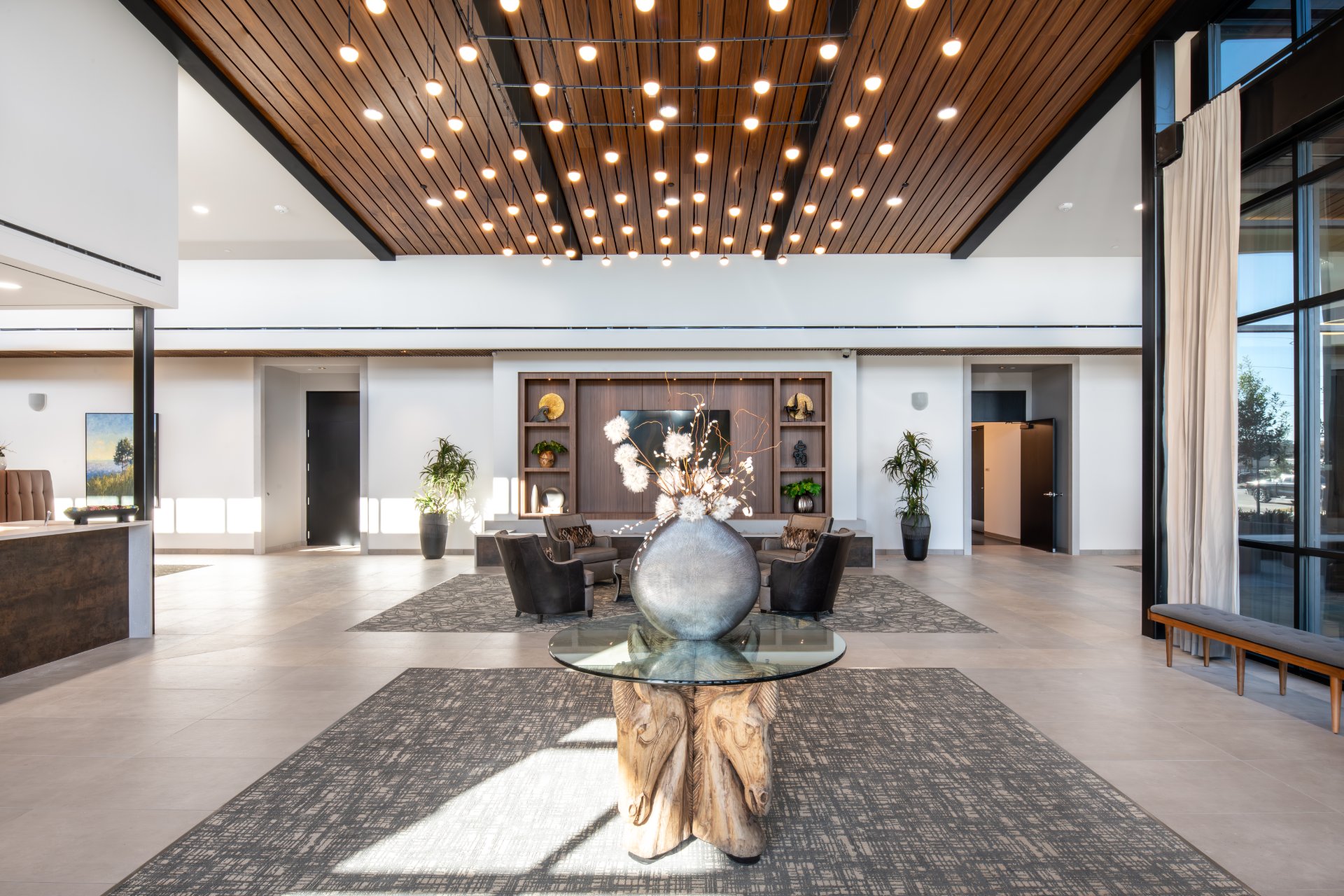
RT60 Explained for Architects: Why Reverberation Time Matters in Architectural Acoustics
Reverberation time is one of those acoustic concepts that quietly determines whether a space feels clear and usable – or frustrating and noisy. It’s often addressed late, after finishes are selected, when options are limited and fixes get expensive. For architects, understanding reverberation time isn’t about becoming an acoustician. It’s about making better decisions before the ceiling plan is locked, the walls are finalized, and the room’s acoustic character is set.
This article breaks down what RT60 means, why it matters in real buildings, and how to approach it as part of practical architectural acoustics – not as an abstract metric, but as a design tool that shapes how spaces actually function.
What is Reverberation Time (RT60), in Plain Terms?
The simplest way to explain Reverberation Time (RT60) is this: it’s how long sound lingers in a room after the source stops.
More specifically, RT60 is the time it takes for sound to decay by 60 decibels once the source is turned off. That definition forms the backbone of RT60 acoustics and is widely used in room acoustics standards and measurement practices.
In practical terms, think of it like this:
- A short reverberation time means sound fades quickly. Speech is clearer and more controlled.
- A long reverberation time means sound hangs around. Words overlap, and the room feels louder than it should.
Architects don’t need to calculate RT60 by hand, but they do need to understand what drives it and what happens when it’s ignored.
Why Reverberation Time Matters in Real Spaces
RT60 isn’t just a laboratory metric. It shows up in the everyday performance of buildings – especially in spaces where communication matters.
In acoustic design for offices, excessive reverberation time leads to conversations bleeding across workstations. Even if background noise levels seem acceptable, the lack of echo reduction makes it harder to focus.
In classrooms, the impact is even more direct. Students miss words. Teachers repeat themselves. Speech intelligibility drops, especially for younger listeners or non-native speakers.
In hospitality acoustics, the effect shifts to crowd-driven noise. Restaurants and bars get progressively louder because people raise their voices to overcome lingering sound energy. What starts as ambiance turns into fatigue.
You’ll see similar patterns in:
- Lecture halls where clarity is inconsistent
- Museums where quiet reflection is disrupted
- Public interiors where announcements become difficult to understand
Across all of these, reverberation time in architecture isn’t theoretical. It directly shapes usability.
The Real Consequences of Poor RT60
When RT60 is off, the problems show up quickly – and they’re rarely subtle.
Speech loses definition first. Consonants blur, syllables overlap, and even simple conversations require more effort than they should. People start repeating themselves, not because the room is loud, but because it’s unclear. A space can register as “quiet” and still perform poorly because reverberation time is working against speech intelligibility.
What makes this tricky is that these issues often develop gradually. Early on, the space may feel a little live but still acceptable. As occupancy increases and overlapping conversations build, that slight excess in reverberation compounds. The result is a steady decline in clarity and comfort that users adapt to, often by speaking louder or disengaging altogether. By the time complaints surface, the problem is already baked into the room.
In the real world, the breakdown looks like this:
- Conversations require repetition, even at short distances
- Meetings feel longer and more tiring than they should
- Background noise builds as overlapping speech accumulates
Offices: Fatigue Without Obvious Noise
In offices, this becomes cognitive fatigue. Focus drops, and conversations carry further than expected – not because people are louder, but because sound lingers.
Classrooms: Clarity Breaks Down Quickly
In classroom acoustics, missed words turn into missed concepts. Teachers raise their voices to compensate, adding more energy into an already reflective room. Over time, this directly impacts learning outcomes, especially for younger students and those already at a listening disadvantage.
Hospitality: The Noise Escalation Loop
In hospitality acoustics, guests raise their voices to be heard, increasing the overall noise level. What starts as energy becomes fatigue. Not surprisingly, excessive noise is one of the most common complaints in restaurants.
Poor reverberation time doesn’t just affect sound – it changes behavior.
What Actually Influences Reverberation Time
Reverberation time is the result of how the room is built and used, not a single design choice.
It’s also important to understand that these factors don’t operate independently. A large volume with highly absorptive finishes may perform well, while a smaller room with hard surfaces can feel surprisingly loud. This is where many projects go sideways – individual decisions seem reasonable in isolation, but collectively they push reverberation time in the wrong direction. Without a coordinated approach, it’s easy to underestimate how quickly these variables add up.
Key factors include:
- Room volume and ceiling height
- The balance of hard and absorptive finishes
- Furniture, occupancy, and layout
- Placement of acoustic treatment
Materials and Volume Set the Direction
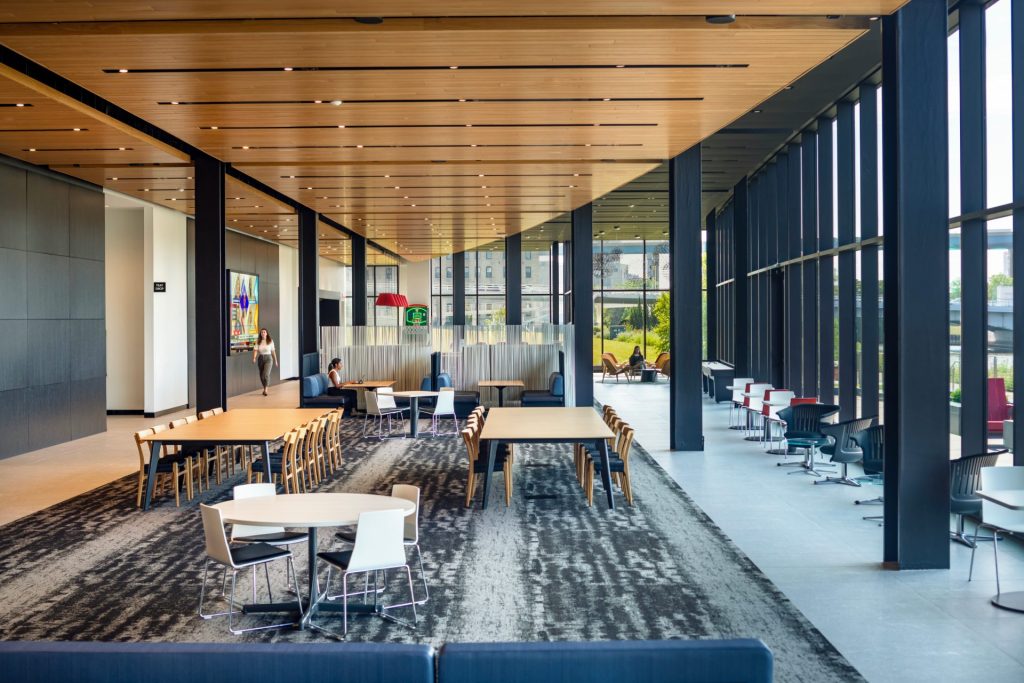
Larger rooms and higher ceilings naturally extend reverberation. Hard finishes like glass and concrete preserve sound energy, while sound absorption materials reduce it. If the palette leans hard, the acoustic outcome is already trending in one direction.
Placement Is Where Performance Is Won or Lost
Panel placement matters just as much as quantity. Coordinated acoustic wall treatments and ceiling systems outperform scattered absorption and have a much greater impact on reverberation time in architecture.
Why Ceilings Carry So Much Weight
The ceiling is often the largest continuous surface in a space – and the most effective place to control reverberation time.
This is also where architects have the most control without disrupting the overall design intent. Unlike walls, which are often constrained by windows, millwork, or room function, ceilings provide a more consistent opportunity to introduce absorption at scale. When that opportunity is missed, it becomes much harder to recover performance elsewhere without introducing visible or uneven treatments.
A strong ceiling strategy can:
- Reduce reverberation evenly across the room
- Intercept sound before it spreads
- Integrate with other building systems
This is why ceiling sound absorption consistently delivers high impact.
Why Walls Alone Don’t Solve RT60
Walls still matter, especially for reflections at ear level. But relying on walls alone leads to uneven results.
The more reliable approach is layered: ceilings handle overall control, while acoustic wall treatments refine clarity.
RT60 vs. “It Sounds Echoey”
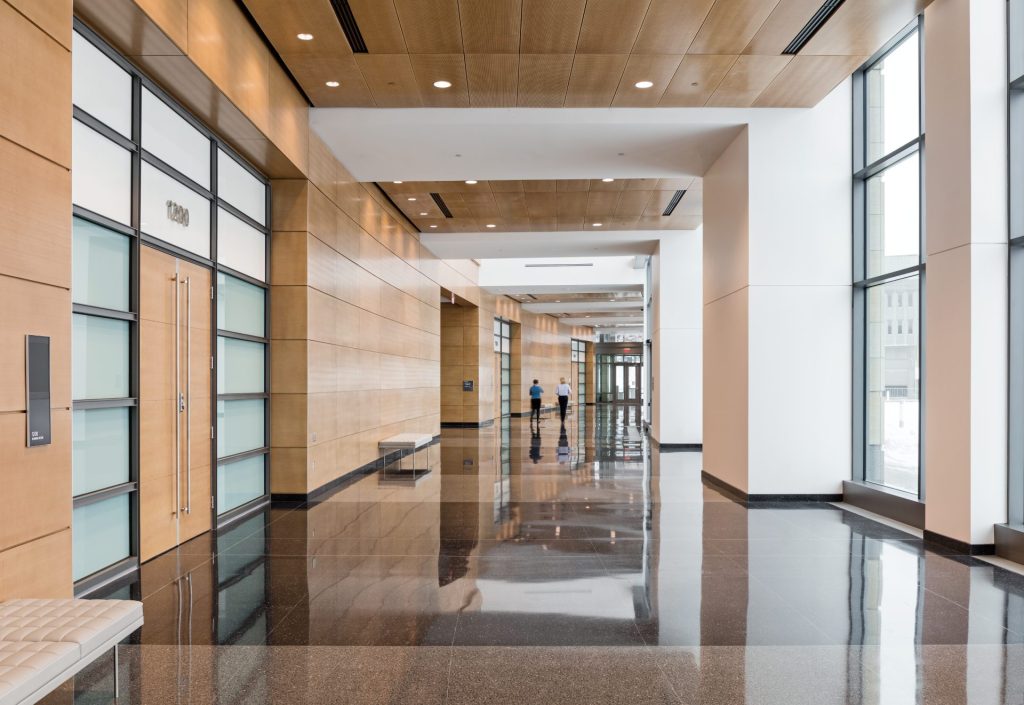
Most clients won’t ask about RT60. They’ll say the space feels echoey.
Part of the challenge is that these descriptions tend to blend together in practice. A client may use “echo” to describe anything from a sharp reflection to a general lack of clarity. Without a clear framework, it’s easy to misdiagnose the issue and apply the wrong type of treatment.
Echo complaints can mean:
- A distant echo from a distant surface
- Flutter echo between parallel walls
- A general sense that sound lingers
Subjective Complaints vs. Measurable Performance
RT60 provides a measurable baseline for how long sound remains in a room. It helps move from vague complaints to targeted solutions. It’s not the only factor, but it’s a solid starting point.
A Brief Note on Measurement
Reverberation time is measured using established standards like ISO 3382 and ASTM E2235. This matters most in projects where performance expectations are high or where communication is critical to the function of the space. In these cases, acoustic outcomes aren’t subjective preferences – they’re part of whether the space works at all. Having a measurable standard gives the design team a way to align expectations early and avoid relying on guesswork later.
What matters for architects is what it enables:
- Objective verification of performance
- Clear targets during design
- Accountability in noise-sensitive spaces
RT60 acoustics isn’t theoretical – it’s testable.
Thinking in Targets, Not Absolutes
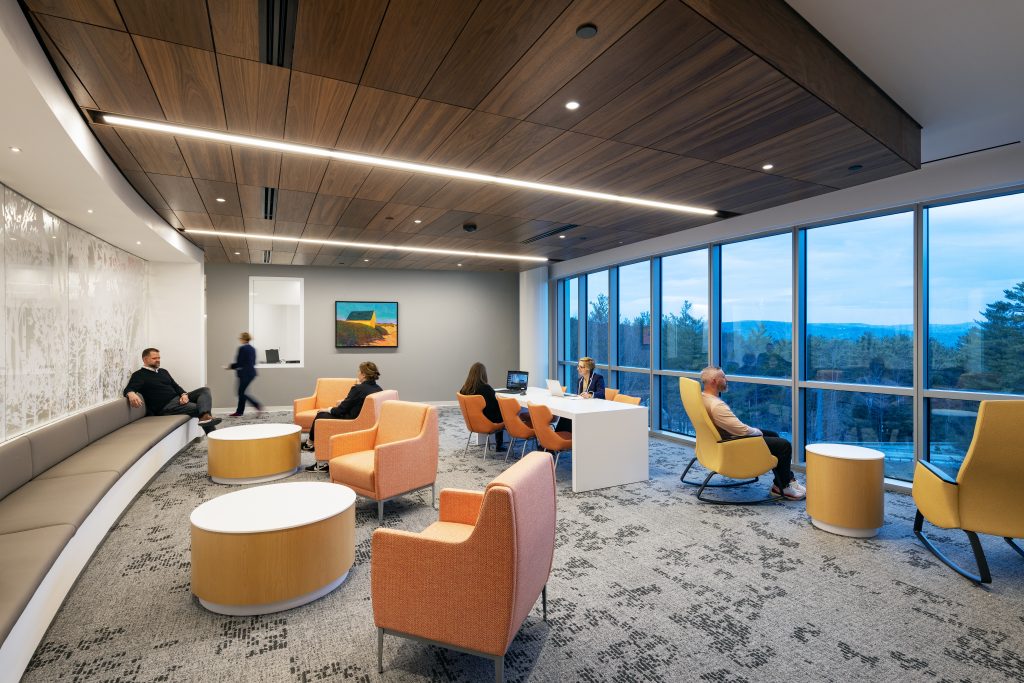
There’s no single “correct” RT60. It depends on use.
- Smaller rooms benefit from shorter RT60 for speech clarity
- Larger spaces may allow longer reverberation
- Multi-use spaces require balance
The goal is alignment between reverberation time and function.
What Architects Can Do Early in Design
RT60 issues usually come from addressing acoustics too late.
- Start with the finish palette
If a space is dominated by hard surfaces, plan for added absorption early on. - Lock the ceiling strategy early
Ceiling systems are one of the most efficient tools for controlling reverberation, but they compete with other systems. Delaying this decision limits options. - Coordinate, don’t patch later
Balance ceiling sound absorption with acoustic wall treatments, and bring in an acoustic consultant where needed – especially in acoustic design for offices, classroom acoustics, and hospitality acoustics.
Early decisions integrate cleanly. Late fixes rarely do.
Final Takeaway
Reverberation time may not be visible, but it defines how a space performs.
When reverberation time is aligned with a room’s purpose, communication feels natural. Speech intelligibility improves, echo reduction happens without effort, and acoustic comfort follows.
When it’s ignored, the opposite happens – more repetition, more fatigue, and more noise.
For architects, this isn’t about chasing a number. It’s about using reverberation time as a practical design tool to make spaces work the way they’re intended to.