



From Aesthetics to Acoustics: Why Backers Matter in Ceiling Design
Ceilings are often specified for how they look: the warmth of wood, the precision of metal, the softness of fabric. But what ultimately determines how they perform acoustically is usually hidden from view. That hidden layer is the acoustic ceiling backer.
Acoustic ceiling backers play a focused but essential role: they enable ceilings to absorb sound and control reverberation. Without them, many ceiling systems that appear “acoustic” remain largely reflective. Yet backers are frequently treated as an afterthought or loosely defined in specifications, which can compromise acoustic performance once a project is built.
This article explains what backers do, how they support NRC improvement, how they interact with different ceiling types, and how to specify them correctly so acoustic intent survives value engineering.
Too often, backers are assumed to be interchangeable or are left vaguely defined during early design phases. Because they are concealed once installed, they are especially vulnerable to substitution or removal as projects move from design intent to construction pricing. When that happens, acoustic performance is frequently the first thing compromised – even though the ceiling may look identical once installed. Clarifying the role and requirements of the acoustic ceiling backer early helps prevent these disconnects between expectation and outcome.
What a Backer Is – and What It Actually Does
A backer is typically a porous acoustic material installed behind the visible ceiling surface. It may be a thin fabric layer, a bonded panel, or a semi-rigid absorptive board placed behind perforated wood panels, micro-perforated tiles, or metal systems. In some assemblies, the backer is separate from the finished face; in others, it functions as the absorptive layer behind an acoustically transparent surface.
Understanding acoustic core vs backer is important. In some ceiling systems, the acoustic core is integral to the panel itself. In others, the backer is a distinct layer added behind the visible ceiling. In both cases, the backer’s role is the same: absorbing sound energy that passes through the ceiling face.
How Backers Enable Sound Absorption
Before diving into ceiling types, it’s useful to understand the basic acoustic mechanism at work. Most ceiling finishes – wood, metal, gypsum – are reflective. Even when perforated or slotted, these materials rely on what sits behind them to manage sound.
This distinction is critical for understanding why ceilings must be evaluated as complete acoustic assemblies rather than as individual components. The visible surface determines how sound enters the system, but the backer determines how that sound is absorbed. Without a clear understanding of this relationship, it is easy to overestimate the acoustic contribution of perforated finishes alone and underestimate the importance of backer selection.
Read More: Backers in Acoustic Design: The Hidden Layer That Shapes Sound
NRC Improvement and Frequency Control
Perforations, slots, and kerfs do not absorb sound on their own. They allow sound to pass through the ceiling surface. The absorptive backer behind those openings is what converts that sound energy into heat, reducing reverberation within the space.
By selecting the appropriate backer material and thickness, designers can achieve measurable NRC improvement and influence how absorption is distributed across frequencies. Published octave-band absorption data helps designers understand how different backers perform in speech-dominant or reverberation-sensitive environments.
Adding an air gap for ceilings between the backer and the structural deck can further improve absorption, particularly in the low-mid frequency range, without increasing the visible depth of the ceiling system.
Secondary Functional Roles (Non-Acoustic)
Although backers do not influence aesthetics, they often support practical project requirements.
Installed behind perforated or open ceilings, backers conceal plenum elements and reduce the risk of dust or debris passing through the openings. This is especially relevant in projects requiring a cleanable acoustic ceiling, such as healthcare, education, or transportation environments.
In some illuminated assemblies, backers may be coordinated with lighting strategies. In back-lit acoustic tiles, translucent or light-compatible layers are sometimes used so lighting performs as intended while acoustic absorption is maintained. Similarly, certain assemblies may reference plenum light diffusion as a coordination consideration, though this does not change the backer’s acoustic purpose.
These secondary roles are less about enhancing performance and more about ensuring compatibility with the broader building system. Backers often need to coordinate with lighting layouts, air distribution strategies, and access requirements above the ceiling plane. While they do not improve aesthetics or structure, their selection and placement can influence how cleanly these systems integrate, reinforcing the importance of early coordination between acoustical, architectural, and MEP disciplines.
Backers by Ceiling Type
Wood Veneer and Linear Wood Systems
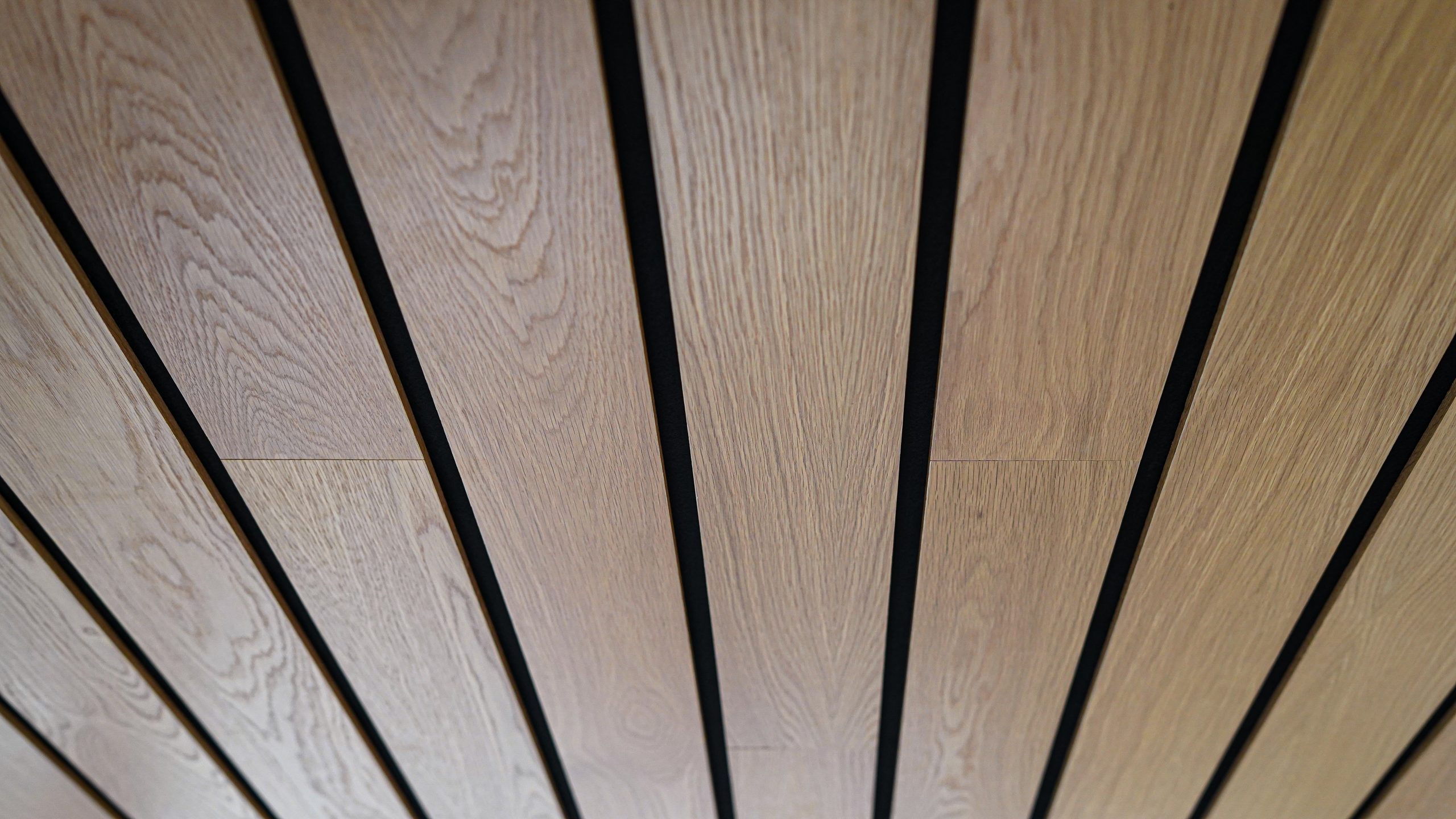
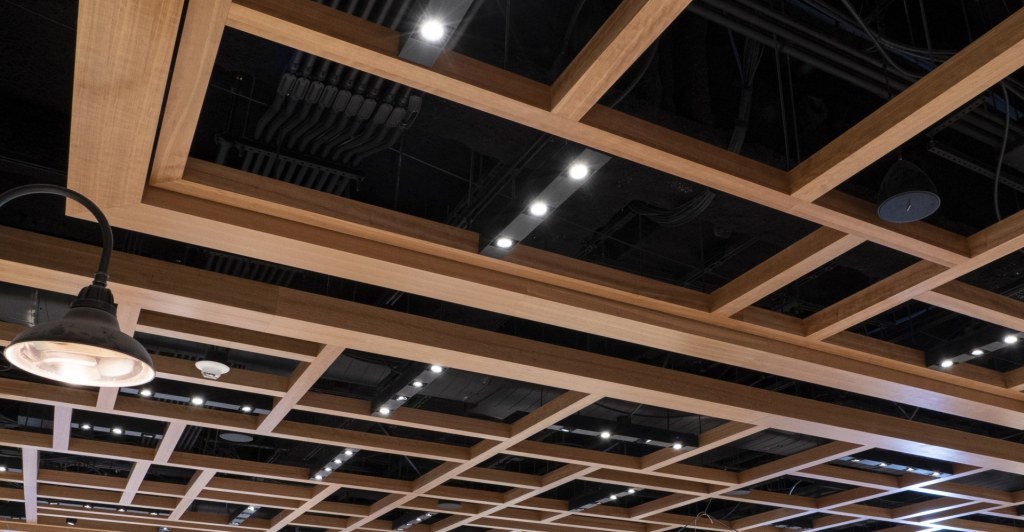
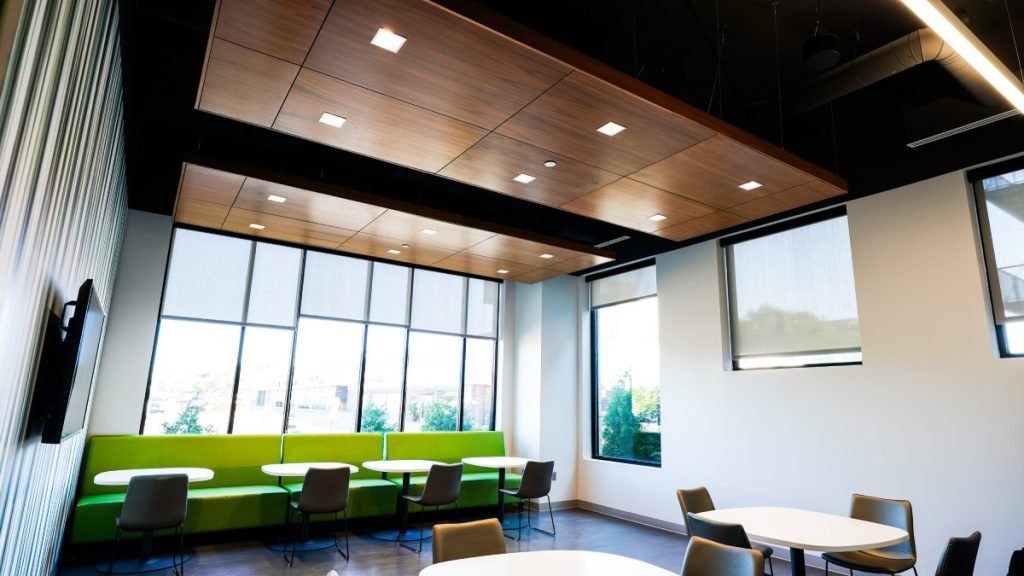
Wood ceilings are among the most frequently misunderstood acoustically. Whether composed of linear wood planks, slatted systems, or perforated panels, wood remains reflective unless paired with an absorptive layer.
In wood veneer ceiling acoustics, kerfs or perforations allow sound to reach the backer. The same applies to slatted systems where a grille ceiling backer is required to manage reverberation while maintaining visual openness.
Typical approaches include:
- Acoustic fleece or thin fabric layers where depth is limited
- Bonded acoustical cotton panels for broadband absorption
- Systems designed to maintain airflow while providing absorption
The intent is not to alter appearance, but to ensure the ceiling contributes meaningfully to sound control.
Perforated and Micro-Perforated Metal Systems
Metal ceilings are durable and cleanable, but acoustically dependent on what sits behind them.
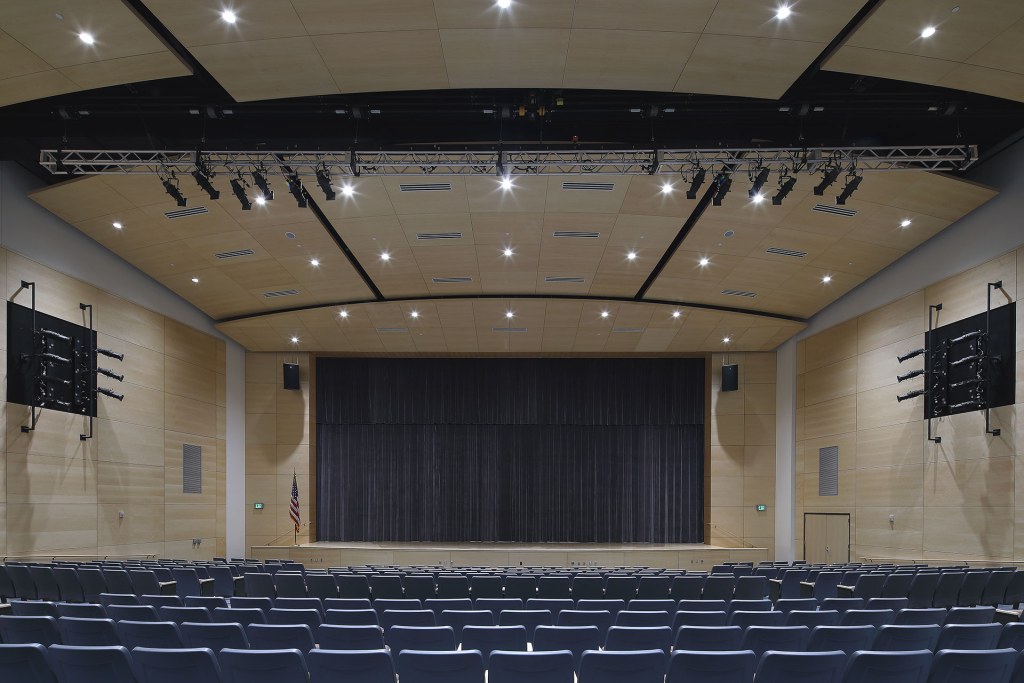
A perforated metal ceiling backer allows these systems to absorb sound rather than reflect it. Thin fabric layers may be sufficient for modest performance goals, while thicker absorptive materials improve bandwidth and overall absorption.
Micro-perforated tiles can sometimes achieve limited absorption using air space alone, but backers are typically introduced to broaden frequency control and block plenum visibility.
Fabric Systems and Clouds
In fabric-based systems, the backer or core material provides the acoustic performance, while the fabric serves as an acoustically transparent finish.
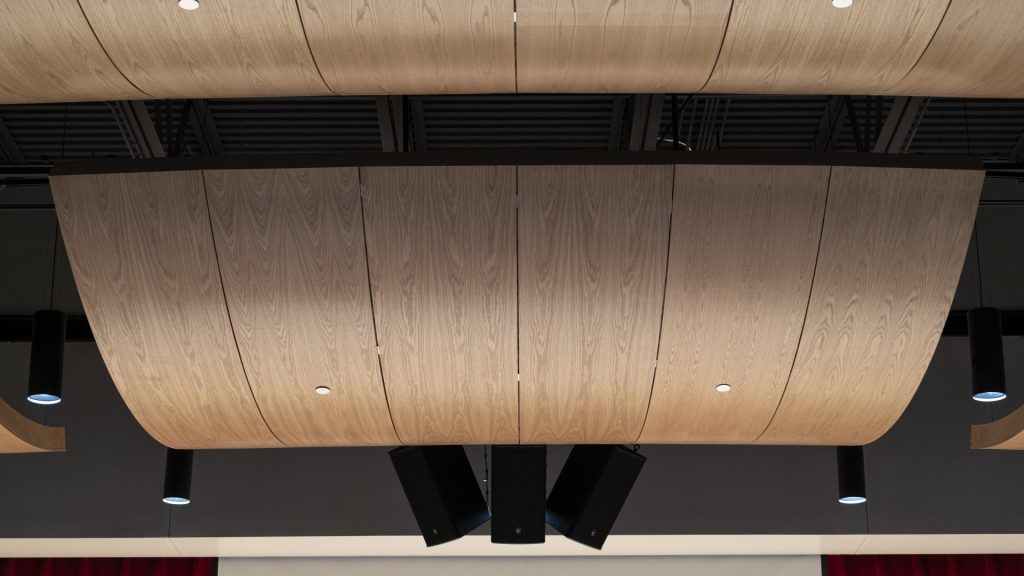
In fabric ceiling clouds, absorptive cores such as bonded cotton or fiberglass panels are commonly used. When combined with an air space above, these systems offer effective reverberation control in open offices, collaboration areas, and public spaces.
Backer Materials Commonly Specified
While ceiling systems vary widely, the backer materials used behind them tend to fall into a few well-established categories. Understanding their characteristics helps teams align performance goals, depth constraints, and environmental requirements.
No single backer material is universally “best.” Instead, selection depends on how much absorption is required, how much depth is available, and what environmental or maintenance constraints apply to the space. Misalignment between these factors is a common source of acoustic underperformance, particularly when materials are selected based on familiarity rather than on documented absorption behavior.
Acoustic Fleece
Acoustic fleece is a thin, non-woven material commonly installed behind perforated wood or metal. Its primary role is to provide modest mid- and high-frequency absorption while concealing the plenum.
Because of its minimal thickness, acoustic fleece is often selected when depth is severely limited or when only incremental acoustic improvement is required. It is not intended for spaces with demanding reverberation control needs but can be effective as part of a layered strategy.
Bonded Acoustical Cotton / Fiberglass
Bonded acoustical cotton and fiberglass remain among the most widely used absorptive materials in ceiling assemblies. These products offer predictable broadband absorption and are supported by published octave-band absorption data, making them easier to evaluate during design.
They are commonly used as backers behind perforated systems or as absorptive cores within ceiling elements. Available thicknesses allow designers to adjust performance based on room volume, ceiling height, and target NRC values.
PET Acoustic Backers
Some manufacturers offer PET acoustic backer products made from thermally bonded polyester fiber, including PET sheets as backer material. These products are often described as non-hygroscopic PET and may be available as a Class A fire-rated backer.
PET backers are typically lightweight and available in a range of thicknesses, with acoustic performance improving as thickness and air space increase.
Environmental and Hygiene Considerations
Beyond performance targets, project context often influences backer selection.
In spaces exposed to variable conditions, designers may specify humidity-resistant ceiling panels paired with absorptive backers that support consistent acoustic behavior. While the backer does not control panel movement or stability, material compatibility remains an important coordination consideration.
In healthcare, food service, and public environments, antimicrobial backer options or sealed absorptive materials may be specified to support infection-control protocols alongside sound absorption.
In many projects, these requirements are driven by owner standards, regulatory guidance, or long-term operational concerns rather than by acoustics alone. Designers must balance these constraints with absorption targets to avoid sacrificing reverberation control in the name of durability or cleanability. Early verification of material compatibility helps ensure that acoustic performance is preserved while meeting hygiene, maintenance, and code-related expectations.
Detailing and Documentation That Protect Results
Because backers are hidden, they are especially vulnerable to omission or substitution. Clear documentation is essential.
Specifications should explicitly define backer type, thickness, fire rating, and installation requirements, including whether an air space is part of the tested assembly. Vague language often leads to performance gaps that are difficult to correct once construction begins.
Penetrations for lighting, sprinklers, and diffusers should be coordinated so the backer layer remains as continuous as possible. Even small unbacked areas can reduce overall absorption and create localized reflective zones.
Treat Backers as Acoustic Components, Not Accessories
Ceilings communicate architectural intent, but backers determine whether those ceilings actually control reverberation. From perforated wood panels and linear wood planks, to micro-perforated tiles and fabric ceiling clouds, acoustic outcomes depend on the absorptive layer behind the surface.
Successful projects treat acoustic ceiling backers as part of ceiling systems – not optional add-ons. Matching backer material and thickness to performance goals, available depth, and environmental requirements protects acoustic intent and reduces late-stage surprises.
If you’re evaluating ceiling options, start the conversation early. Share your ceiling type, target NRC range, and available plenum depth. ASI Architectural can help assess acoustic strategies and specification clarity so ceiling designs deliver reliable reverberation control without compromising visual intent.