



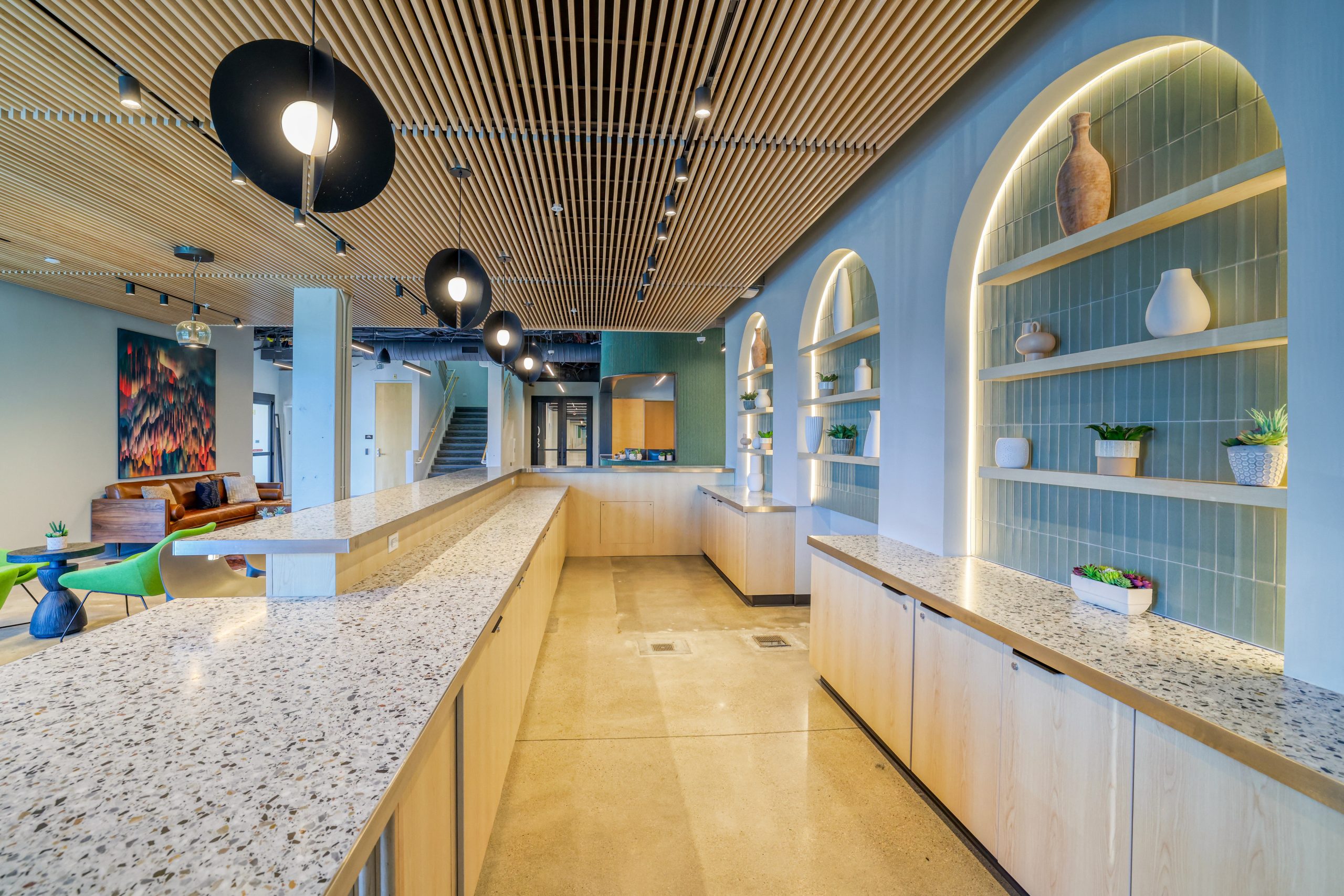
Architectural rhythm is one of those concepts designers instinctively understand but don’t always articulate. You feel it when a space flows naturally, when your eye moves effortlessly across a wall, or when a ceiling layout subtly guides you through a room. That experience isn’t accidental – it’s the result of intentional design rhythm in architecture, informed by proportion, repetition, and alignment. In acoustic architecture, this rhythm becomes even more important because the same patterns that shape what we see often shape what we hear.
This article explores how architectural rhythm works, why it matters for a more human experience, and how mathematical thinking supports core architectural design principles. It also shows how rhythm applies to both visual and acoustic elements, setting the stage for proportion, repetition, and alignment as foundational tools in effective architectural design.
What Is Rhythm in Architecture – and Why It Matters
Rhythm in architecture refers to the organized repetition and variation of elements that create a sense of movement and coherence within a space. It can be established through:
- Repeated lines, forms, or modules
- Gradual progression of size or spacing
- Strategic alignment of features across surfaces
In well-designed environments, architectural rhythm helps occupants intuitively understand a space. It can make large areas feel ordered rather than chaotic, and small spaces feel intentional rather than cramped. Rhythm in modern architecture is especially important, as open plans and multifunctional spaces depend heavily on visual cues.
When it comes to rhythm in acoustic architecture, rhythm operates on two levels simultaneously:
- Visually, through the layout of panels, baffles, clouds, and grilles
- Functionally, through the distribution of absorption, diffusion, and reflection
When design rhythm aligns with acoustic performance goals, the result is a space that not only looks cohesive but also supports clarity, comfort, and usability.
The Mathematics of Design Rhythm
Behind every effective rhythm is an underlying system. While intuition plays a role, many successful acoustic layouts are grounded in numeric relationships that bring order to complexity. These tools reinforce both acoustic performance and broader acoustic design principles.
The Golden Ratio and Harmonic Proportions
The Golden Ratio is a proportional relationship that tends to feel visually balanced to the human eye. Instead of approaching it as an abstract mathematical formula, designers can use it as a practical guideline for organizing proportions and ratios so elements relate naturally to one another within a space.
In acoustic architecture, the Golden Ratio can help guide layout decisions such as:
- The proportion between large and small panel groupings on a wall
- The balance between treated areas and negative space
- The relationship between feature elements and surrounding field panels
For example, rather than dividing a wall exactly in half, a designer might allocate roughly 60 percent of the surface to one panel composition and 40 percent to another. This subtle shift away from symmetry supports architectural rhythm while avoiding layouts that feel overly rigid or predictable.
These ideas extend into broader harmonic proportions in design, where designers rely on simple whole-number relationships, such as 2:3 or 3:5, to shape compositions that feel intentional and visually comfortable. Together, these approaches reinforce design rhythm in architecture by creating layouts that feel cohesive rather than arbitrary.
Rule of Thirds
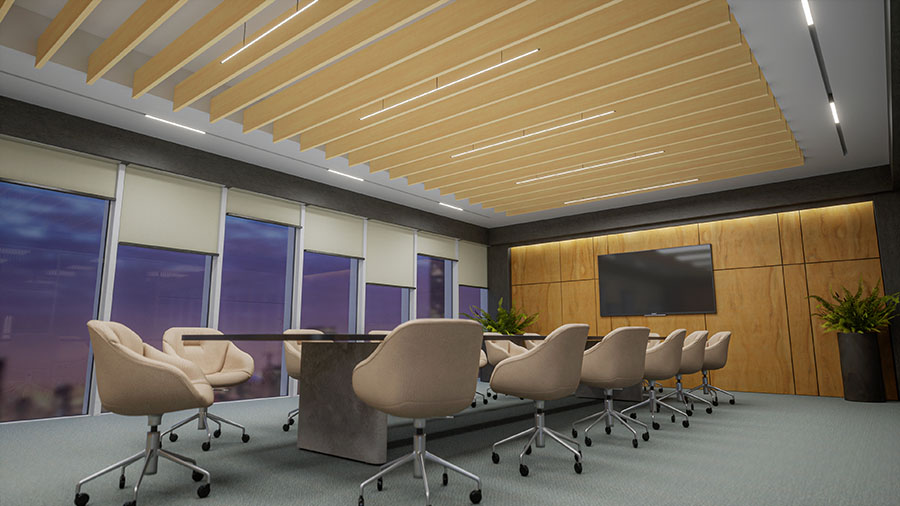
Borrowed from photography and graphic design, the rule of thirds divides a surface into three equal vertical and horizontal sections. You may have seen a grid designed to simplify this rule on your camera. Rather than centering every element, designers can place seams, texture changes, or feature panels along these grid lines.
In acoustic layouts, this supports:
- Dynamic rather than static compositions
- More natural visual flow
- Stronger alignment with architectural intent
Using the rule of thirds is a practical way to bring structure to design rhythm in architecture without making a space feel rigid or over-designed.
Modular Coordination and Interval Repetition
Modular systems are foundational to architectural rhythm, especially in commercial construction. Common grid increments such as 4”, 8”, or 16” help acoustic elements align with architectural grid layouts, including:
- Ceiling tile systems
- Framing modules
- Lighting and HVAC coordination
This is where modular acoustic design becomes particularly valuable. Aligning panel sizes, reveals, and seams with the building grid reinforces architectural pattern repetition and creates a sense of cohesion rather than visual noise.
Fibonacci Progressions in Acoustic Design
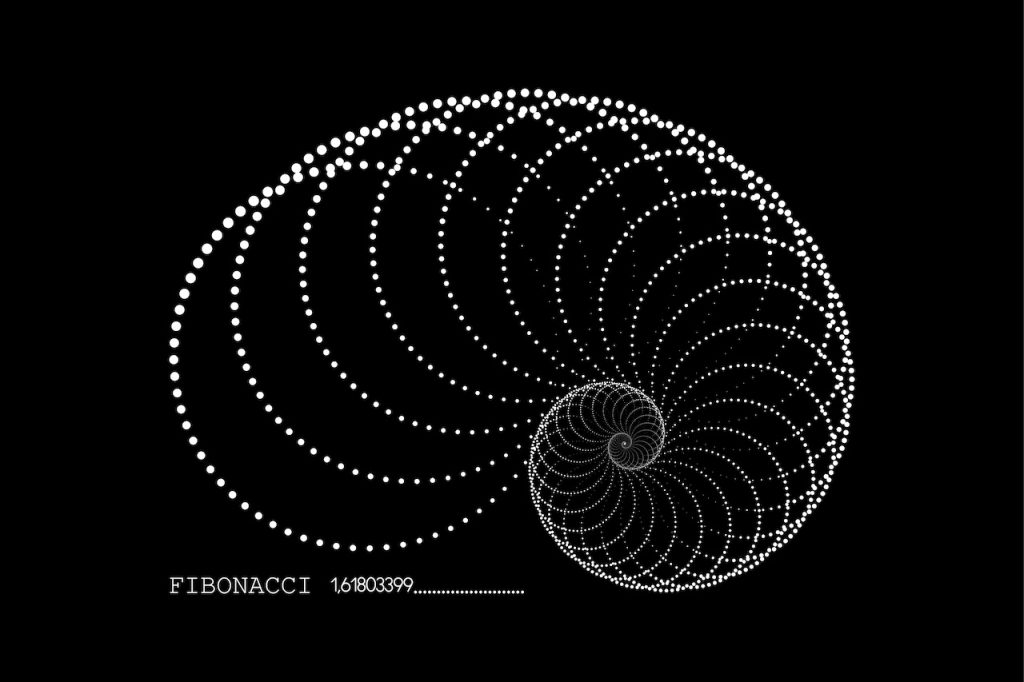
The Fibonacci sequence in architecture (1, 1, 2, 3, 5, 8, 13…) offers a framework for gradual variation. Unlike strict repetition, Fibonacci-based layouts introduce progression – change that feels organic rather than abrupt.
In acoustic applications, this might look like:
- Wall panels that gradually increase in width across a feature wall
- Spacing between baffles that subtly expands or contracts
- Variations in scale that evolve as you move through a space
Because these progressions mirror patterns found in nature, they support architectural rhythm that feels intuitive and calming rather than mechanical.
Balancing Visual and Acoustic Weight
Not all rhythm is purely visual. Acoustic products carry functional “weight” as well. A layout might meet performance requirements but still feel visually unbalanced if scale and placement aren’t considered.
Effective design rhythm accounts for:
- Scale adjustments that support visual balance in architecture
- Distribution of treatment that supports performance without clustering
- Placement that reflects intentional spacing and repetition
When acoustic performance and composition work together, rhythm becomes a strength rather than a constraint.
Rhythm in Acoustic Product Layouts
Architectural rhythm becomes tangible when applied to real products and real spaces. Each acoustic element offers different opportunities to shape rhythm depending on its form, placement, and application.
Suspended Acoustic Clouds
Suspended acoustic clouds are especially effective for establishing overhead rhythm in open spaces. Designers can establish strong ceiling rhythm patterns through grouping, height variation, and thoughtful cloud ceiling spacing.
Common rhythm strategies include:
- Grouping clouds to define functional zones
- Varying suspension heights to introduce depth
- Using consistent spacing to guide movement
When discussing cloud applications, options like cloud ceiling panels allow designers to support architectural rhythm while maintaining flexibility in layout and performance.
Baffle Ceilings
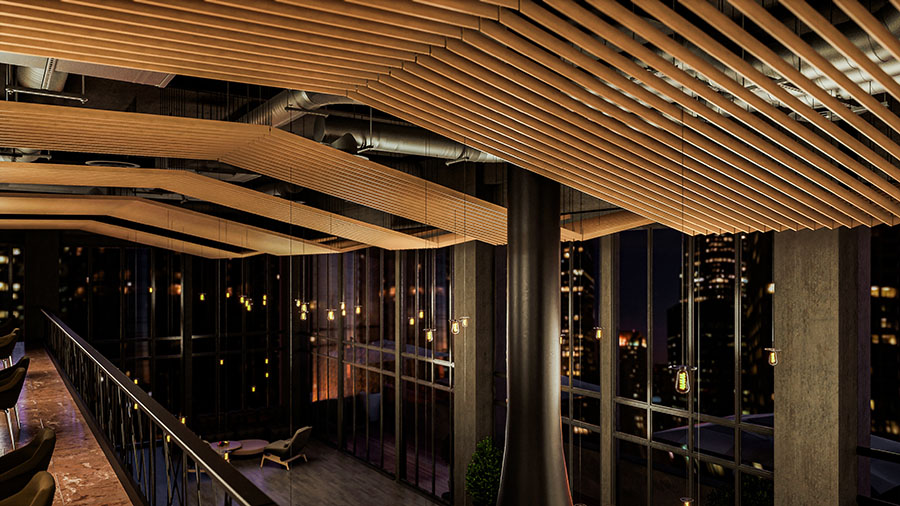
Baffles introduce strong linear directionality and can guide circulation when used appropriately. Well-executed baffle ceiling patterns can reinforce movement and orientation within long corridors or expansive volumes.
That said, baffles are a specialized solution:
- Ceiling heights must be sufficient for proper proportion
- Visual density can quickly become overwhelming
- Poorly planned layouts can undermine both aesthetics and acoustics
Because of these constraints, baffles often benefit from manufacturer guidance. ASI’s baffle ceiling resources help teams determine whether this approach supports the intended design rhythm in architecture.
Wall Panels and Grilles
Wall-mounted products are where rhythm often becomes most visible. Panels can reinforce structure, establish hierarchy, and communicate intent through carefully considered wall panel rhythm layouts.
Designers frequently use wall panels to:
- Align with mullions, columns, or reveals
- Support feature walls through repetition and variation
- Reinforce horizontal or vertical movement within a space
Linear systems such as wood grilles introduce a particularly strong sense of rhythm. When used thoughtfully, wood grille ceiling systems can extend that linear language across surfaces, creating continuity between walls and ceilings while supporting both acoustic performance and visual coherence.
Why Rhythm Is Foundational to Better Acoustic Architecture
Architectural rhythm is not decorative – it’s foundational. It shapes how people navigate, how they perceive order, and how comfortable they feel in a space.
When acoustic elements align with broader architectural alignment techniques, the result is consistency rather than conflict. Designers who integrate rhythm early tend to achieve:
- A clear underlying organizational logic
- Consistent alignment with architectural features
- A balance between repetition and variation
These principles apply whether you’re specifying a few wall panels in a conference room or coordinating large-scale acoustic treatments across an open office, auditorium, or public space.
Bringing It All Together
The intersection of mathematics, acoustics, and aesthetics is where truly thoughtful design happens. A strong sense of rhythm gives structure to creativity, ensuring that compositions feel human rather than mechanical. By applying proportional systems like the Golden Ratio, organizational rules like the rule of thirds, and practical frameworks like modular coordination, designers gain greater control over how spaces look and perform.
Acoustic products – clouds, baffles, panels, and grilles – are more than technical solutions. They are architectural elements that contribute to the overall rhythm of a space. When they are selected and arranged with intention, they reinforce both the visual language and the acoustic comfort of the environment.
For architects and specifiers, the takeaway is simple: treat acoustic layouts with the same design rigor you would apply to any other architectural system. When architectural rhythm is considered from the beginning, the result is a space that feels cohesive, intuitive, and purposefully designed – from the first glance to the final echo.
Ready to apply these principles to your next project? ASI Architectural partners with architects and specifiers to deliver acoustic solutions that reinforce design rhythm in architecture. Connect with our team to develop cohesive, performance-driven layouts that support both aesthetic intent and acoustic performance.