



Backers in Acoustic Design: The Hidden Layer That Shapes Sound
Every designer knows that the true beauty of an interior often hides in its details–the joints you never see, the fasteners tucked from view, the surfaces that seem to float. In acoustical design, that hidden detail is often the backer. It’s the quiet partner behind every perforated wood panel, metal ceiling, or grille system that actually makes a room sound right. Without it, even the most elegant panel may be just decorative. With it, you gain control–measurable, predictable control–over how sound behaves.
An acoustical backing isn’t glamorous, but it’s the layer that delivers acoustic performance in your visual design. Pick the right backer, and your space keeps its clean lines and finishes while taming reverberation and echo. Miss the mark, and you may end up with a beautiful room that’s uncomfortably loud. In the end, the goal is simple: design that sounds as good as it looks.
What Exactly is a Backer?
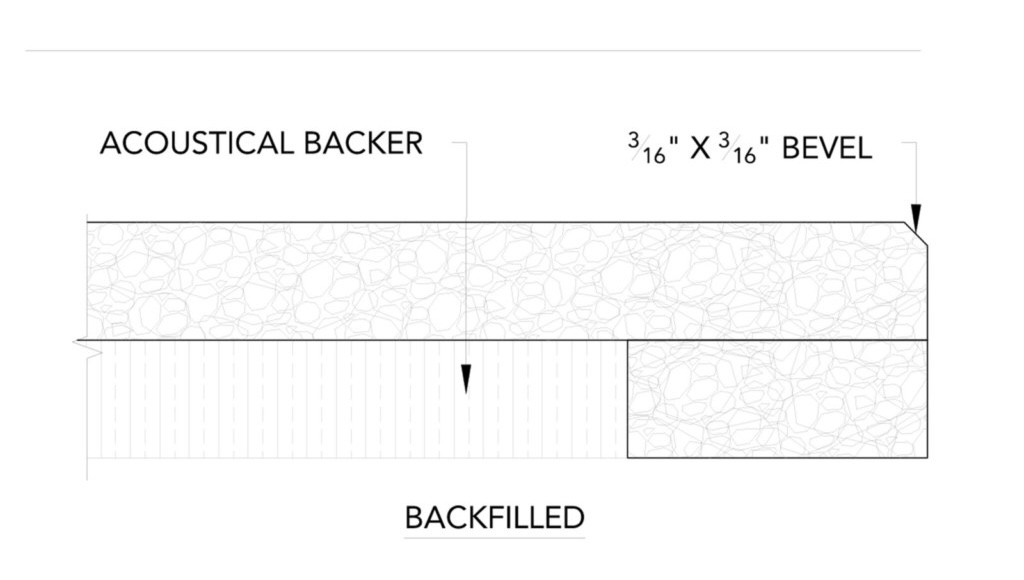
In plain terms, a backer–also called backing–is the absorptive layer hidden behind a decorative face. It’s what allows a wall or ceiling system to absorb sound rather than reflect it back into the room. Here is a visual representation of the invisible chain that transforms a decorative surface into an acoustic treatment.:
Face material (wood veneer, metal, or gypsum) → perforations or reveals → air space → acoustical backer.
At ASI Architectural, we utilize two common approaches:
- Nonwoven acoustic fleece, such as Soundtex backer, is applied directly to the rear of perforated or slotted panels. This thin layer improves mid-to-high frequency absorption while maintaining a minimal profile–ideal for when depth is tight.
- Added absorptive backers, typically one or two inches thick, provide a better broadband absorption response. ASI’s bonded acoustical cotton, for example, achieves roughly 0.60 NRC at 1 inch and 0.90 NRC at 2 inches.
When you look behind systems like ASI’s Fusion, Linear, or Grille lines, you’ll find one of these approaches pulling the acoustic legwork. The visible surface drives the aesthetic, while the acoustical backer drives the performance.
Why Backers Matter: Absorption, Reflection, and Durability
A surface without backing behaves like a mirror for sound. Building materials like wood, gypsum, and metal reflect sound energy back into a space, amplifying chatter and echo. Add perforations and an acoustical backing, though, and that surface begins to breathe–allowing sound to pass through, dissipate, and vanish into an absorptive layer. That’s the essence of why backers matter.
Absorption and NRC
Backers directly shape a panel’s noise reduction coefficient (NRC), the number that describes how much sound a material absorbs. NRC values range from 0.0 to 1.0 (values above 1.0 are possible but typically result from testing variations in highly absorptive systems), with 0.0 meaning total reflection, and 1.0 meaning a very absorptive surface. In practical terms, higher NRC values mean quieter spaces and clearer speech. ASI’s bonded acoustical cotton publishes around 0.60 NRC at 1 inch and 0.90 NRC at 2 inches, depending on the configuration and face material.
Perforated wood panels or linear planks with Soundtex fleece alone typically hit respectable NRC values in the 0.50-0.70 range–excellent for when you want a subtle acoustic lift without thick assemblies. When you pair that with a 1”-2” absorptive layer, the results shift toward the high-performance end of the chart.
In microperforated panels, the relationship is even more nuanced. Tiny holes–often smaller than a millimeter–work in tandem with a highly absorptive fiberglass or mineral-fiber core which provides absorption across many frequencies. The holes in the microperf panels are so small that they are nearly invisible – even from as close as a few feet away. These panels provide the look of beautiful wood – the absorptive core is truly invisible.
Reflection and Tonal Control
Reflection isn’t always bad. A room needs the right amount of reflection to maintain its brightness and liveliness. The art lies in balancing absorption vs reflection. Backers allow designers to control this balance precisely. For instance, perforated gypsum panels with a non-woven backer keep the sleek look of drywall but reduce flutter echoes and improve speech clarity. Perforated metal and wood systems do the same, each offering a slightly different acoustic signature–wood lending warmth, metal emphasizing clarity.
So while the visible face dictates aesthetics, the backer determines how the room feels to the ear. That combination is what sets architectural acoustics apart from just decorative paneling.
Durability, Cleanability, and Real-World Performance
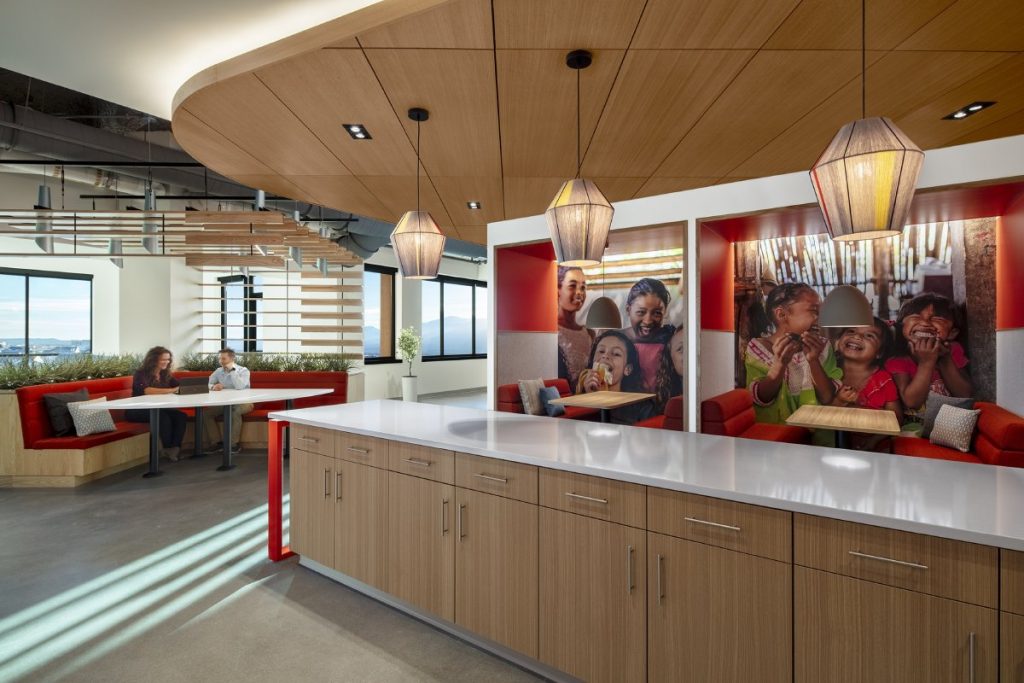
Backers also influence durability indirectly, by allowing the front material to perform its visual and protective roles while the hidden layer handles the sound. Metal acoustical panels excel in environments that demand impact resistance and cleanable surfaces, such as healthcare and transit settings. Their microperforated faces paired with either a simple air space, an optional acoustical fleece, or a cotton backer offer toughness and hygiene without compromising sound absorption.
Wood-faced systems balance warmth with longevity. When a decorative veneer is bonded to an MDF core, these systems gain rigidity and machinability for perforations and kerfs, while maintaining a high-quality finish. Perforated gypsum, on the other hand, delivers a smooth, monolithic appearance but requires gentler handling–ideal for ceilings or walls above reach.
Ultimately, a project’s success isn’t just about how quiet it is–it’s about achieving that control without sacrificing durability, fire safety, or appearance.
ASI’s Class-A rated cores and backers ensure that each layer contributes both to safety and long-term performance.
Backer Materials Compared
Not all backers are created equally. The performance, durability, and fire rating of a system depend heavily on the materials used behind the surface. Four primary categories dominate modern acoustic assemblies: gypsum, MDF, metal, and fiberglass. Each offers unique benefits and trade-offs, and the choice depends on the design intent, performance targets, and project conditions.
Perforated Gypsum with an Acoustical Backing
Plain gypsum is one of the most commonly used reflective surfaces used in interiors–it’s dense, smooth, and completely non-porous to sound. But when the gypsum sheet is perforated prior to finishing with paper (which covers the holes and make them invisible) and paired with an acoustical backing, this system becomes a powerful absorber that maintains its seamless, monolithic look.
Perforated gypsum panels with nonwoven acoustic fleece or a bonded backer can achieve NRC values approaching 0.90, rivaling traditional acoustic tile systems. The perforations allow sound to pass through the gypsum face, while the backer dissipates sound energy as heat. The result is the familiar drywall aesthetic with significantly reduced echo and flutter.
This makes perforated gypsum ideal for clean, minimal ceilings in offices, classrooms, and auditoriums–spaces where designers want the performance of acoustic panels without abandoning a smooth, architectural finish.
MDF as the Wood Panel Core
Medium-density fiberboard (MDF) is the backbone of many wood acoustic systems. Its fine, uniform structure allows for precise machining–whether you’re cutting perforations, slots, or reveal patterns–and it provides a stable substrate for wood veneer or laminate faces.
On its own, an MDF core is acoustically reflective. But when you introduce perforations and add an acoustical backing–whether a thin Soundtex backer or a thicker bonded acoustical cotton–the system transforms. The perforations let sound pass through the wood face and allows the backer to absorb the energy that would otherwise bounce back into the room.
Systems like ASI’s Fusion and Audition panels use this pairing to great effect, offering designers a range of NRC options from approximately 0.60 to 0.90 depending on depth and configuration. The panels maintain a Class-A fire rating, high impact resistance, and the warmth of real wood finishes–all key for education, hospitality, and commercial environments.
Metal (Perforated & Microperforated)
When durability and hygiene are top priorities, metal remains unmatched. Metal acoustical panels manufactured with extremely small and precise perforation patterns, creating an absorber that’s both functional and cleanable.
In standard perforated metal systems, the acoustic performance depends on the perforation ratio and the backer used. Pairing with an acoustic liner or fiberglass core can elevate NRC values well into the 0.80-0.90 range.
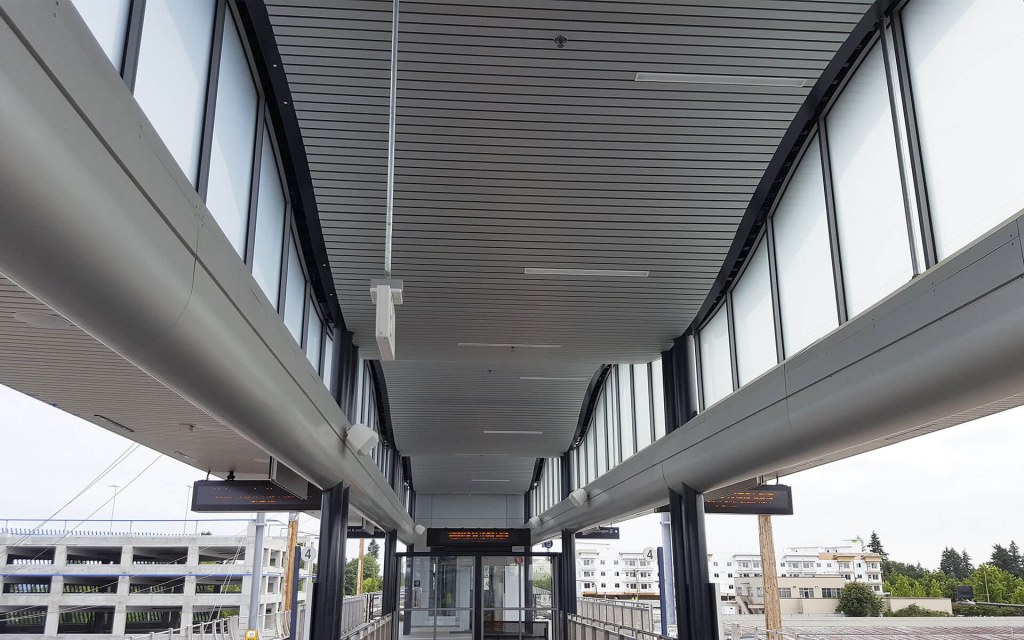
Microperforated panels push the concept further. With perforations so fine they’re nearly invisible, these systems use controlled air resistance within the holes to absorb sound–often achieving measurable NRC performance even without incorporating a fibrous backer. This makes microperforated metal ideal for healthcare, transit, and food-service environments where hygiene and wipeability are crucial but added fabric layers aren’t practical.
Metal systems also offer long-term resilience against moisture and impact, making them a go-to for public spaces and infrastructure projects that demand both acoustic control and easy maintenance.
Fiberglass as a Core or Backer
Fiberglass is one of the most widely used workhorses for acoustic absorption. Provided in many thicknesses and densities, it is inherently fire-resistant and has been a standard in acoustic construction for decades. A fiberglass core or fiberglass backer provides consistent broadband absorption, making it a natural companion to perforated faces of all kinds–wood, metal, or gypsum.
At densities around 6 pounds per cubic foot, fiberglass panels achieve NRC values similar to ASI’s bonded cotton backer–roughly 0.60 at 1 inch and 0.90 at 2 inches. It’s used inside microperforated panel systems that have a decorative wood veneered face, where it hides completely behind the decorative layer.
Fiberglass’s natural Class-A fire rating and dimensional stability make it ideal for ceilings, clouds, and walls in performance spaces or high-traffic areas. The trade-off is fragility; fiberglass can shed fibers when cut or handled without a facing, so it’s often wrapped or encapsulated to protect both installers and long-term air quality.
Where to Actually Use Backing
Backers are invisible, but their impact is everywhere. Wherever sound control is needed without sacrificing design intent, a well-chosen backer quietly does its job.
- Open ceilings and slat systems: Grille systems with an acoustical liner or hidden grille backer behind rails provide invisible absorption. The rails remain crisp and uninterrupted, while sound energy is absorbed behind the scenes. Designers love this for lobbies, corridors, and open office spaces where aesthetics are essential.
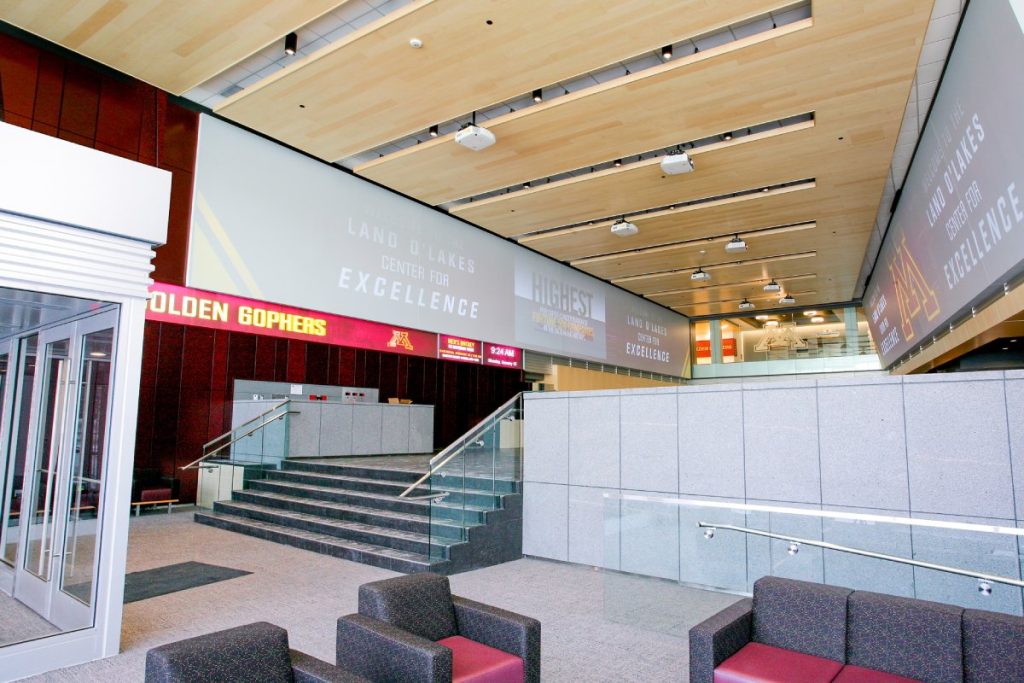
- Linear wood planks: Adding an acoustical backer above Reveal or tongue-and-groove planks tames long corridors and large open spaces. The absorption happens out of sight, allowing the natural wood warmth and linear rhythm to dominate the visual experience.
- Feature Clouds: Perforated Cloud panels with an internal ceiling clouds backer deliver floating acoustic treatment over seating zones or gathering areas. These ceiling clouds allow for targeted absorption exactly where it’s needed while leaving open ceiling areas untouched.
- Perforated wood walls and ceilings: Systems like ASI’s Fusion and Audition panels pair a Soundtex backer with optional 1”-2” absorptive layers to hit target NRC values without losing wood aesthetics. The result is a visually continuous wall or ceiling that also controls echo and reverberation effectively.
In each case, the backer is unseen but essential–doing the heavy lifting of acoustic performance while the visible surface carries the design narrative.
How Backer Choice Changes Performance and Feel
Your choice of backer shapes not only measured NRC but also the subjective experience in the space.
- Absorption bandwidth: Thicker or more resistive backers improve low-to-mid frequency absorption, while thin nonwoven layers like Soundtex target high and mid frequencies with minimal depth. Microperforated panels can tune absorption without adding thickness.
- Room impression: More absorption produces a “tighter,” drier sound–ideal for speech intelligibility in classrooms or offices. Too much absorption, however, can deaden a space, so combining with diffusion or selective coverage ensures balance.
- Privacy and containment: For speech privacy, absorption alone isn’t enough. Pairing acoustic backers with mass–doors, partitions, and ceiling assemblies–creates real privacy while maintaining clarity.
- Durability and maintenance: Environments with high traffic or potential abuse, such as gyms, transit stations, or healthcare facilities, benefit from metal or wood faces with protected backers. In quieter spaces, PET, cotton, or fiberglass backers hidden behind wood panels are typical. Each choice balances acoustic performance with long-term usability.
Picking a Backer: A 3-Step Cheat Sheet
Designers can streamline product decisions by taking a few points into consideration:
- Target NRC: Speech-focused rooms often aim for 0.60-0.80 NRC overall. Higher performance may be needed in auditoriums or multipurpose spaces.
- Available depth: When only 1 inch is available, pair a Soundtex backer with 1” absorptive backing. At 2 inches, thicker bonded cotton or fiberglass backers offer significant mid-low gains, reaching around 0.90 NRC.
- Abuse level and cleanability: High-traffic or hygienic areas favor microperf metal, sometimes without an additional backer. Offices, classrooms, and aesthetic-sensitive spaces typically use perforated wood with a cotton or fiberglass backer.
For designers aiming for exact NRC targets, ASI reps can match hole or kerf patterns with the correct backer to meet performance goals without altering the visual design.
Installation Tips for What You Won’t Be Seeing
Backers are mostly hidden, so installation focused on maintaining consistent spacing, coverage, and alignment with the decorative face.
- Grille systems: The backer sits behind rails; install carefully to ensure uniform absorption without interfering with the crisp linear look.
- Linear Reveal systems: Backers are positioned above planks, silently absorbing while maintaining the reveal’s clean aesthetics.
- Cloud panels: Backers fit inside the body, providing targeted absorption without visible seams or disruptions.
Following manufacturer recommendations ensures that the invisible layer performs as designed, maintaining both acoustic and aesthetic integrity over time.
The Wrap-Up on Backers
In acoustic design, the finish dictates the look; the backer dictates the sound. A thin, nonwoven layer like Soundtex combined with a 1”-2” acoustical backing behind perforated wood–or a microperf system with a tuned core–delivers the clarity, control, and comfort you need without compromising the visual aesthetic.
Selecting the right backer ensures that your space doesn’t just look polished–it sounds as intentional as it looks. Across ASI product lines, from Fusion and Audition to Linear, Grille, and Cloud systems, the hidden layer of acoustical backing transforms surfaces into high-performing, durable, and visually seamless acoustic treatments.
Ready to balance beauty and performance in your next project? The acoustics pros at ASI Architectural can help you select the right hole pattern, material, and acoustical backing to achieve your desired NRC and acoustic goals–without compromising the design you envision.