



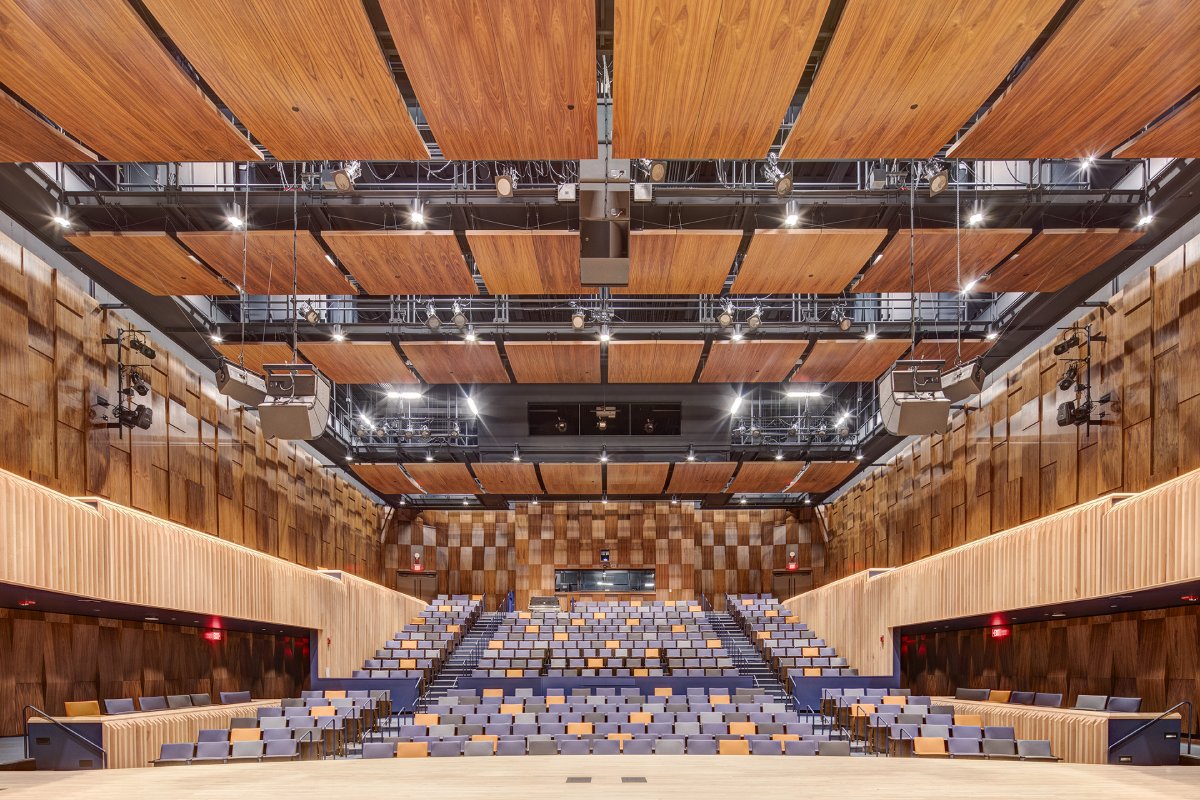
A cloud ceiling is one of the most effective ways to improve acoustics in open commercial interiors without giving up height, visibility, or architectural character. Instead of covering the entire overhead plane, acoustic ceiling clouds are suspended selectively below the structure to help manage reflections, reduce echo, and define zones within a space.
That flexibility is a big reason architects and designers continue to use ceiling clouds in open offices, lobbies, auditoriums, educational buildings, and retrofit projects. Clouds backed with an absorptive media can help manage reverberation and reflected sound while preserving the exposed structure aesthetic many modern interiors are built around. At the same time, they introduce rhythm, texture, lighting opportunities, and visual organization overhead.
The best acoustic ceiling clouds are not just decorative elements hanging in space. They are coordinated acoustic tools that shape how a room both sounds and feels.
What is a cloud ceiling?
If you have ever looked up in a commercial interior and seen floating panels suspended (parallel with the floor) below an exposed structure, you have most likely seen a cloud ceiling system.
At its simplest, a cloud ceiling is a horizontally suspended overhead element installed below the structural deck rather than connected into a continuous lay-in grid or directly attached to the ceiling plane. Unlike traditional acoustic ceilings that fully cover the plane above, ceiling clouds leave portions of the structure visible. That openness is part of their appeal.
Some clouds are primarily architectural, others are engineered specifically for acoustical performance, and some clouds are both. The distinction matters because not every floating panel improves sound in a meaningful way.
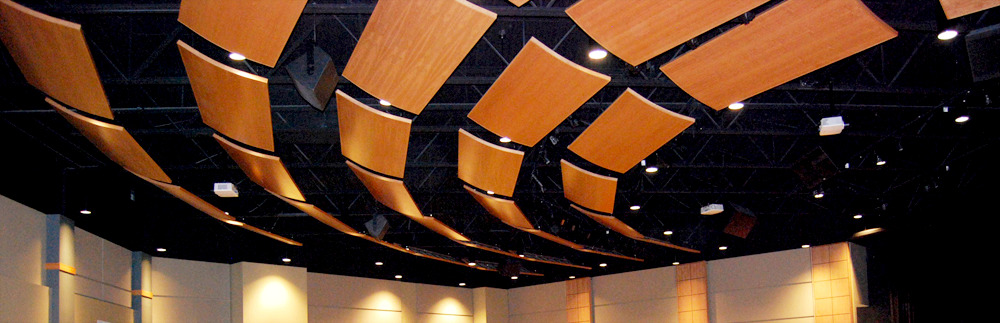
What separates ceiling clouds from standard ceilings?
Traditional ceiling systems create a continuous surface across the entire room. Ceiling clouds work differently by providing targeted overhead treatment only where it is needed.
That flexibility allows designers to preserve exposed structure, maintain access to utilities, and improve acoustics without visually lowering the entire ceiling plane. In many modern interiors, that balance is exactly the goal.
This is one reason ceiling clouds have become common in projects focused on open ceiling acoustics, particularly in offices, hospitality spaces, educational buildings, and adaptive reuse environments.
Common types of ceiling clouds
Acoustic ceiling clouds come in several forms, including:
- Flat panels
- Convex ceiling clouds
- Concave ceiling clouds
- Curved or sculptural forms
- Perforated ceiling clouds
- Wood ceiling clouds
- Floating ceiling panels
- Custom ceiling clouds
Custom curved clouds can introduce strong visual movement overhead, although custom radius clouds are often limited to minimum radiuses around 48” depending on panel construction.
Some are primarily architectural features, while others are engineered specifically for acoustic performance. Choosing a decorative cloud panel with acoustical performance can deliver both visual and sound-control benefits in one package.
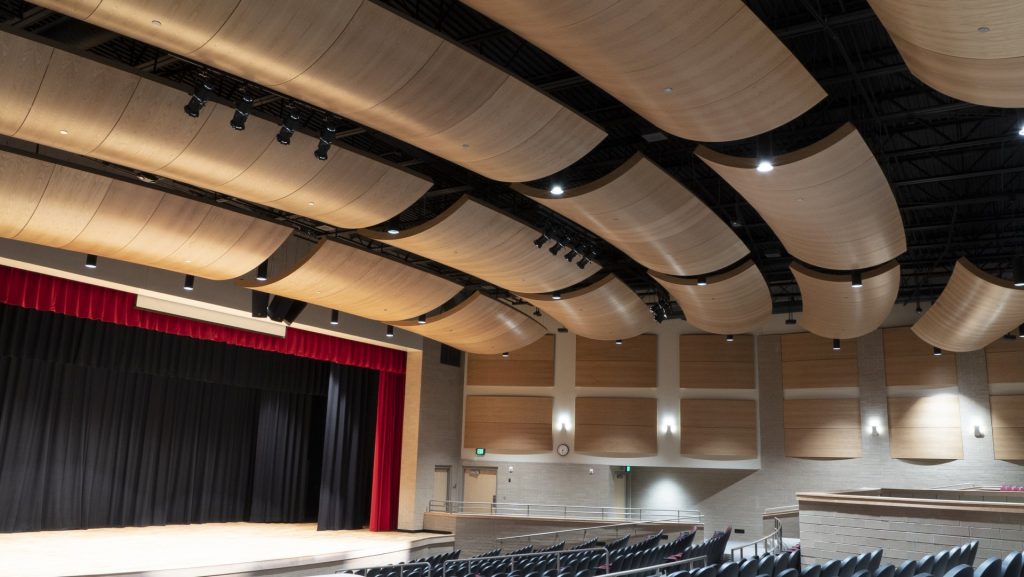
How acoustic ceiling clouds actually work
Acoustic ceiling clouds help manage reverberation by redirecting, scattering, or absorbing reflected sound, depending on their construction. Understanding how ceiling clouds work starts with understanding how sound behaves in large open interiors.
In open interiors with exposed structure, sound reflects off concrete, glass, metal, and hard flooring. That buildup creates echo, speech confusion, and overall listener fatigue. An acoustic cloud ceiling helps interrupt those reflections overhead.
Managing reflected sound overhead
Suspended acoustic panels interact with sound energy as it moves upward through the room, either scattering reflections or absorbing sound when perforated and paired with acoustic backers. Because clouds are exposed on multiple sides, they can often perform efficiently without requiring full ceiling coverage.
This makes ceiling clouds for acoustics especially useful in large rooms where targeted treatment is more practical than a continuous ceiling.
Common placement areas include:
- Collaboration zones
- Reception spaces
- Seating areas
- Audience zones
- Open circulation paths
Absorption vs diffusion
One common misunderstanding around ceiling cloud acoustics is assuming every cloud performs the same way acoustically.
Some acoustic cloud panels function similarly to sound absorbing ceiling clouds by reducing reflected sound energy, while others primarily diffuse reflections by scattering sound in multiple directions. Some decorative acoustic clouds offer little acoustic value at all.
Performance depends on panel factors like:
- Material thickness
- Perforation
- Acoustic backers
- Panel spacing
- Air cavity depth
This is why perforated ceiling clouds typically require absorptive backing material behind the visible surface, often available in multiple thicknesses such as 1” and 2” acoustic backers depending on performance goals.
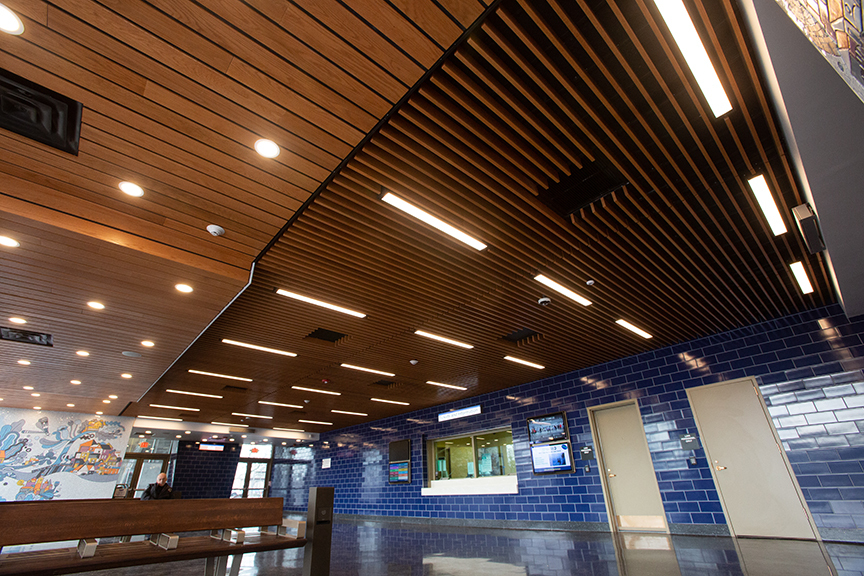
When ceiling clouds make more sense than a full ceiling system
One of the biggest reasons designers specify ceiling clouds instead of a traditional ceiling is flexibility.
Exposed structure projects
Many contemporary interiors intentionally leave ductwork, structure, and utilities visible. A full acoustic ceiling would eliminate that openness entirely.
Ceiling clouds in open spaces like this preserve the exposed aesthetic while still improving reverberation control and ceiling performance where it matters most.
Retrofit situations
Retrofit acoustic ceiling solutions are another major application.
In existing buildings, installing a complete suspended ceiling may create conflicts with lighting, sprinkler systems, mechanical distribution, or ceiling height limitations. Cloud ceiling panels can often be integrated more selectively with fewer disruptions.
Targeted treatment
Not every room needs uniform acoustic coverage.
Selective placement improves speech comfort over gathering zones or collaboration areas without covering the entire overhead plane. This is where ceiling clouds vs full ceiling systems become a practical design decision rather than a stylistic preference.
The biggest benefits of ceiling clouds in open spaces
The strongest cloud ceiling benefits usually come from balancing acoustic performance with architectural intent.
Reduced reverberation and echo
The primary advantage is improved sound control. Ceiling clouds help manage reflected sound and reduce echo buildup in open interiors.
Better speech comfort
Acoustic treatment for open ceilings often improves how comfortable a space feels, even when occupants cannot immediately identify why. Reducing reverberation helps conversations sound clearer and less fatiguing over time.
Preserved openness
Unlike continuous ceilings, suspended ceiling clouds maintain visible height and structural openness. That balance is especially valuable in modern commercial interiors.
Visual organization
Cloud ceiling design can also define circulation, gathering areas, and focal points overhead. In many projects, the clouds become part of the architectural identity rather than simply an acoustic add-on.
Best places to use a cloud ceiling
Cloud ceiling applications work best in large or open environments where sound reflections travel long distances and become difficult to control. Knowing where to use ceiling clouds depends on room volume, surface materials, and how the space will actually function day to day.
Open offices
A cloud ceiling office strategy often focuses on collaboration spaces, touchdown zones, and meeting areas where speech buildup becomes distracting.
Lobbies and atriums
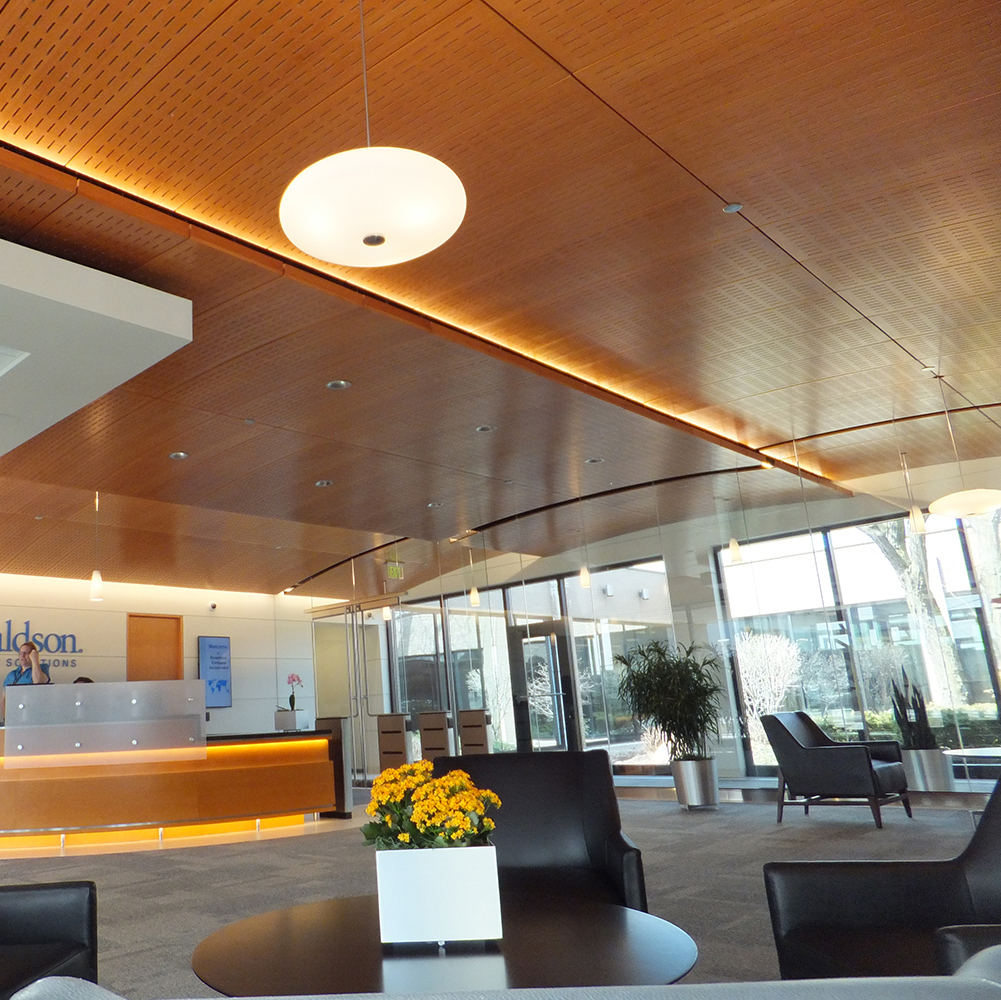
A cloud ceiling lobby application typically combines acoustical improvement with visual impact. Large entry spaces often contain hard reflective surfaces and tall volumes that benefit from overhead reflection management and targeted acoustic treatment.
Auditoriums and assembly spaces
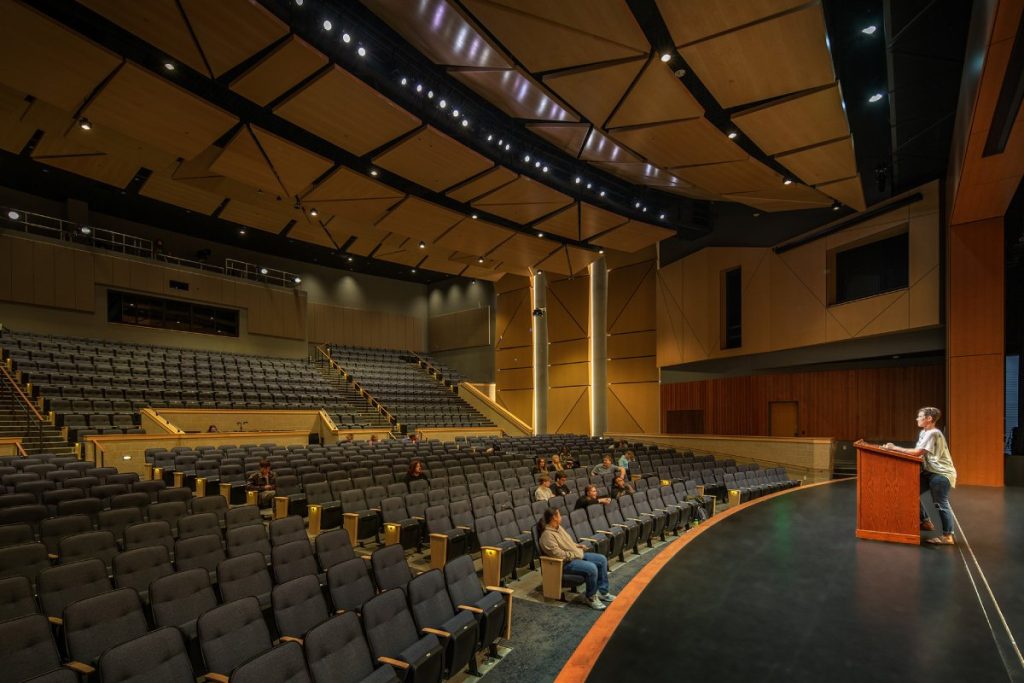
A cloud ceiling auditorium design may use both absorption and diffusion depending on the room’s performance goals and audience needs.
Educational and activity spaces
Libraries, student commons, and gym environments using a cloud ceiling frequently benefit from high ceiling acoustic treatment because of their open layouts and hard surface conditions.
Retail and hospitality projects also use architectural ceiling clouds to soften noise while reinforcing lighting concepts and overall visual character.
Ceiling clouds vs wall panels: do you need both?
Using both can be a good idea.
Acoustic ceiling clouds are highly effective for overhead reflections, but wall panels often address sidewall reflections and speech privacy more effectively.
Clouds are excellent for:
- Open-volume reverberation control
- Preserving openness
- Improving speech comfort
Wall panels are often better for:
- First-reflection control
- Lateral reflections
- Additional speech management
In many projects, the strongest results come from combining both systems strategically. Using ceiling and wall treatments together often creates more balanced acoustic coverage throughout the space.
Design applications: how ceiling clouds shape the look of a space
Ceiling clouds are often specified because they contribute visually as much as acoustically.
Grouping and spacing
Clusters of clouds create rhythm overhead while helping organize large spaces visually. Tighter spacing increases acoustic coverage, while wider spacing preserves openness.
Linear vs feature layouts
Linear layouts reinforce circulation and architectural geometry. Feature clouds can create focal points in lobbies, gathering areas, and hospitality environments.
Integrating lighting
A cloud ceiling with lighting coordination is common in commercial interiors. Clouds frequently integrate with:
- Linear fixtures
- Pendant lighting
- Downlights
- Cove systems
Early coordination is important so lighting, suspension, and mechanical systems work together cleanly.
Material warmth
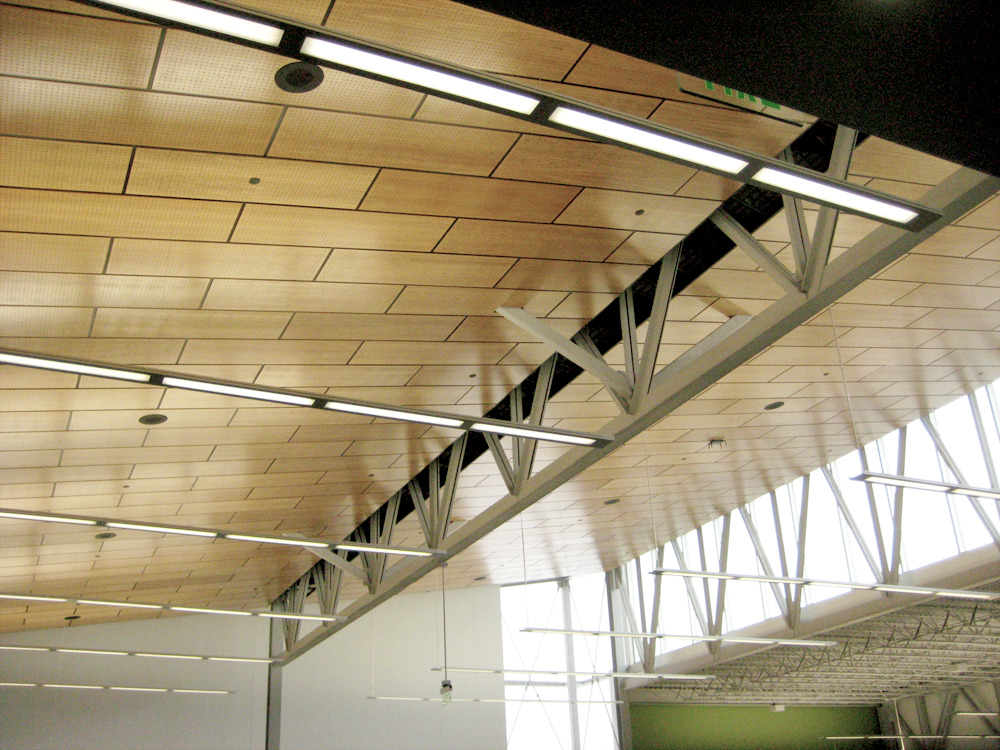
Wood ceiling clouds remain popular because they soften modern interiors visually while still supporting acoustical goals when properly engineered. Many systems are also available with FSC-certified materials and can contribute toward broader LEED-focused project goals.
What to coordinate before specifying ceiling clouds
Ceiling clouds may appear simple once installed, but successful systems require thoughtful coordination early in the design process.
Suspension and structure
Every cloud ceiling system requires proper suspension detailing tied back to the structure above. Alignment, accessibility, and seismic considerations all affect installation quality.
HVAC and fire protection
Cloud placement should coordinate with HVAC airflow and sprinkler layouts to avoid performance conflicts or code issues.
Acoustic performance targets
Not all acoustically treated ceiling clouds perform equally. Specification teams should evaluate NRC values, backer requirements, spacing, and ceiling height alongside the actual acoustic needs of the room.
Final take
Ceiling clouds work best when they solve sound and shape space at the same time.
Ceiling clouds are most effective when they are used intentionally rather than simply added as a decorative element.
They work especially well in open, high-volume, and flexible interiors where designers want better acoustics without sacrificing openness or architectural character. In many projects, a cloud ceiling system delivers a better balance between sound control and visual flexibility than a full ceiling approach.
The best results come from early coordination between acoustics, lighting, mechanical systems, and architectural intent. When those elements align, acoustic ceiling clouds help shape how a space sounds, functions, and feels.
FAQs
What is a cloud ceiling?
A cloud ceiling is a suspended overhead panel system used to improve acoustics and define space while preserving an open ceiling appearance.
Do acoustic ceiling clouds reduce echo?
Yes. Acoustic ceiling clouds help reduce reverberation and reflected sound in open interiors.
When should you use ceiling clouds instead of a full ceiling?
Ceiling clouds are ideal for exposed-structure projects, retrofits, and spaces where openness should remain visible.
Are ceiling clouds good for open office acoustics?
Yes. They improve speech comfort and reduce sound buildup in collaborative environments.
Do ceiling clouds absorb or diffuse sound?
Some clouds primarily reflect and scatter sound, while perforated systems with acoustic backers can redirect sound and provide meaningful sound absorption.
Can ceiling clouds work with lighting and HVAC?
Yes. Ceiling clouds are commonly coordinated with lighting, sprinklers, and HVAC systems.
Are ceiling clouds mainly decorative or acoustic?
They can be either. Some are primarily visual elements, while others are engineered for acoustic performance.
Where should acoustic ceiling clouds be placed?
They work best above gathering areas, collaboration zones, seating areas, and circulation paths.
Do ceiling clouds need acoustic backers?
Often yes. Acoustic backers improve absorption performance, particularly in perforated cloud ceiling systems.