



The Future of Sustainable Acoustics: Low-Carbon, Recycled & Bio-Materials
The conversation around sustainable acoustic materials has shifted from niche interest to core specification priority. Today, architects and designers are expected to balance architectural acoustics, aesthetics, fire performance, and budget – while also addressing embodied carbon, indoor air quality, and material lifecycle. Increasingly, “sustainable surfaces” are defined not just by how they look or perform, but by how they are sourced, manufactured, installed, and ultimately reused or recycled.
In practical terms, this means selecting systems that reduce carbon impact, minimize waste, and limit VOC emissions – without compromising acoustic performance. From low-carbon wall panels to sustainable ceiling materials, the next generation of acoustic solutions is reshaping how we think about interior environments. The future is not about choosing between performance and sustainability. It is about designing systems that deliver both.
Key Benefits of Next-Gen Materials
The shift toward sustainable acoustics is driven by measurable advantages that extend well beyond environmental goals. These materials and systems are helping project teams meet regulatory requirements, corporate ESG targets, and occupant expectations.
At a glance, next-generation acoustic materials support project goals in several practical ways:
- Waste reduction: Diverts plastics, textiles, and agricultural byproducts into high-performance recycled acoustic panels and ceiling systems
- Renewable sourcing: Expands the use of rapidly renewable materials like bamboo, cork, and wood fiber
- Healthier interiors: Supports better air quality through low-VOC architectural panels and cleaner manufacturing processes
- Circular lifecycle: Enables circular design ceilings with reusable components and design for disassembly strategies
- Performance alignment: Maintains acoustic targets while advancing sustainability benchmarks across the project
These benefits are not theoretical – they show up in real material choices and system design decisions across today’s acoustic applications.
First, they significantly reduce waste. Many modern acoustic systems incorporate post-consumer or post-industrial content, including plastics, textiles, and agricultural byproducts. Products like recycled acoustic panels or systems using recyclable acoustic infill help divert materials from landfills while supporting circular economy benchmarks.
Second, renewable resources are becoming more prominent. Fast-growing materials such as bamboo, cork, and certain wood fibers regenerate quickly and reduce dependence on petrochemical-based products. This shift is especially visible in bio-based acoustic materials, which combine natural inputs with engineered performance.
Indoor air quality is another major benefit. Many low-VOC architectural panels now use cleaner adhesives, finishes, and binders, contributing to healthier interiors, particularly in schools, offices, and healthcare settings.
Finally, circularity is no longer theoretical. With strategies like design for disassembly, modular construction, and manufacturer take-back programs, acoustic systems can now be specified with reuse in mind. This is where circular design ceilings and modular wall systems begin to play a meaningful role, allowing components to be replaced or repurposed without full system demolition.
Recycled & Upcycled Materials
Recycled PET Felt
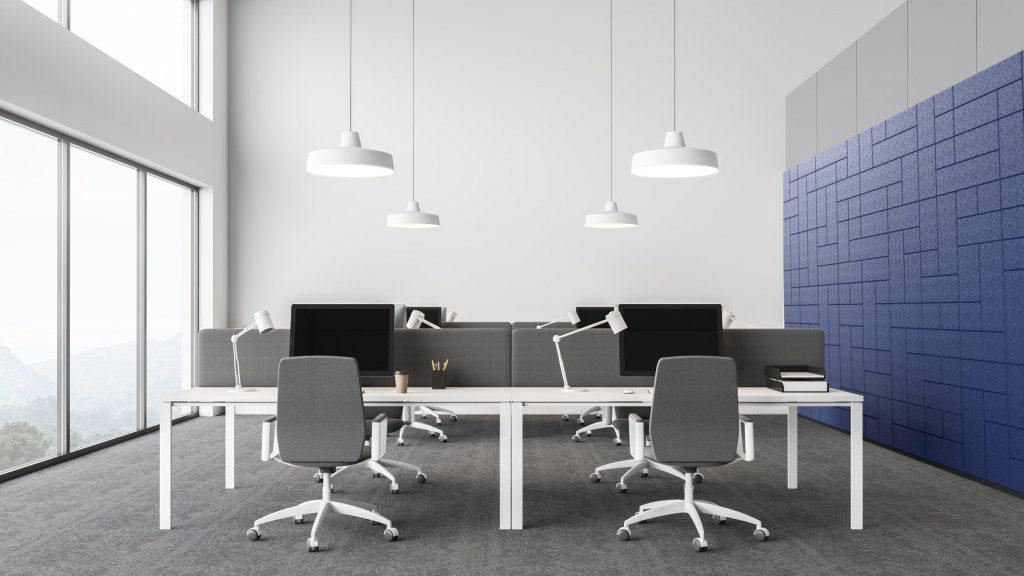
Recycled PET felt is one of the most recognizable examples of sustainable innovation in acoustics. Made from post-consumer plastic bottles, PET felt baffles and wall panels offer strong sound absorption while giving waste materials a second life. They are lightweight, easy to fabricate, and can be CNC-cut into custom shapes for feature walls or baffle ceiling systems.
These solutions are especially effective in open offices, educational environments, and collaborative spaces where both acoustics and visual identity matter. While some manufacturers specialize in PET systems, they can also be integrated alongside other ceiling and wall strategies within a broader acoustic plan.
Recycled Cotton (Textile Fiber)
Recycled cotton panels are typically produced from upcycled denim or textile waste. These dense, fibrous boards provide excellent sound absorption and are often used as hidden backers behind decorative surfaces.
They are particularly effective when paired with perforated wood acoustic panels, microperforated wood panels, or perforated metal ceiling panels. In these assemblies, the visible face remains a clean architectural finish, while the recycled cotton core delivers high NRC performance. This approach allows designers to meet acoustic targets without sacrificing material authenticity.
Recycled Glass
Recycled glass insulation is another proven solution. Produced from glass cullet, it is spun into fibrous material that offers strong acoustic absorption and thermal stability. Because it is inert and recyclable, it aligns well with sustainability goals.
In practice, recycled glass is often used as a plenum or back-of-panel absorber. Systems such as coffered ceilings, modular wall panels, and perforated assemblies can incorporate this material as part of a layered acoustic strategy, improving performance while supporting environmental targets.
Across these recycled and upcycled materials, several application patterns consistently deliver strong acoustic and sustainability outcomes:
- Open-plan offices: PET felt baffles and recycled acoustic panels reduce reverberation while supporting branded design elements
- Education environments: Recycled cotton or glass infill behind perforated wood acoustic panels improves speech clarity and focus
- Feature walls: Microperforated wood panels paired with recycled cores balance aesthetics and acoustic absorption
- Ceilings and plenums: Recyclable acoustic infill materials enhance performance without increasing visible system complexity
Natural & Plant-Based Materials
Cork
Cork stands out as a renewable material harvested from tree bark without harming the tree itself. It offers natural acoustic campaigning, thermal insulation, and distinctive visual warmth. Applications include cork wall panels for feature walls, pin-up surfaces, and even ceiling treatments.
While cork is not always used as a primary finished panel in all systems, it can serve as a sustainable backing layer behind modular ceiling or wall systems, contributing to both performance and environmental goals.
StrandTec Wood Wool
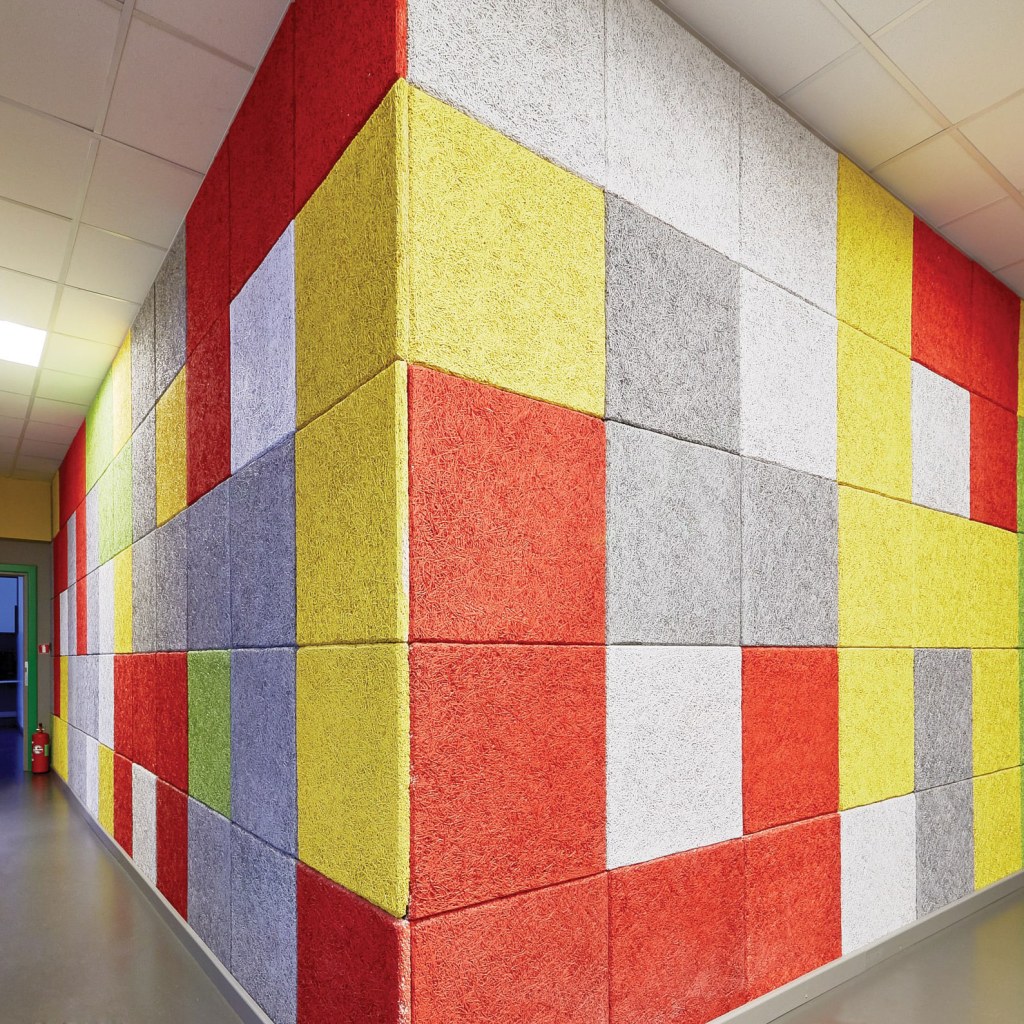
Wood wool panels, made from wood strands bonded with mineral-based binders, provide a rugged, textured aesthetic with strong acoustic performance. These panels are often fire-rated and highly durable, making them ideal for gyms, pools, and classrooms.
They can be integrated into modular systems or installed as expressive acoustic elements, including ceiling baffles. Their combination of durability and sound absorption makes them a practical solution for high-traffic environments.
Bamboo
Bamboo is one of the fastest-growing renewable materials available, making it an attractive option for sustainable interiors. Its strength and consistent grain pattern lend themselves well to ceiling and wall applications, including ceiling wood planks and veneered panel systems.
In acoustic design, bamboo is often used as a finish layer over absorptive cores, combining sustainability with a warm, contemporary aesthetic.
Straw & Hemp
Architectural byproducts such as straw and hemp are increasingly being pressed into acoustic boards. These materials offer good thermal and acoustic properties while supporting waste reduction in agricultural industries.
They are commonly used as infill behind perforated faces, helping achieve acoustic performance targets while reinforcing an eco-conscious design narrative.
Wood Fiber
Wood fiber acoustic panels are often confused with wood wool, but the two differ in structure and application. Wood wool uses long strands bound together, creating a coarse, textured surface. Wood fiber panels, by contrast, are made from finer fibers, resulting in a smoother, more uniform appearance.
Both provide acoustic benefits, but wood fiber panels are typically more refined visually and often more versatile for large-scale installations. They also represent a lower-carbon alternative to traditional fiberglass or foam-based absorbers.
Innovative & Bio-Engineered Materials
Mycelium (Fungi-Based)
Mycelium-based materials are grown rather than manufactured, using fungal networks to bind organic matter into lightweight, compostable forms. While still emerging, they show promise in acoustic applications, particularly for sculptural wall panels, ceiling elements, and acoustic ceiling clouds.
These materials are especially compelling for projects that prioritize innovation and environmental storytelling alongside performance.
Mineral Wool
Mineral wool, derived from volcanic rock, remains a cornerstone of acoustic design. It is non-combustible, dimensionally stable, and highly effective at absorption.
Often used as an infill behind perforated surfaces, mineral wool supports both acoustic and fire performance requirements. It is a reliable choice for applications where safety and consistency are priorities.
Engineered Wood Systems
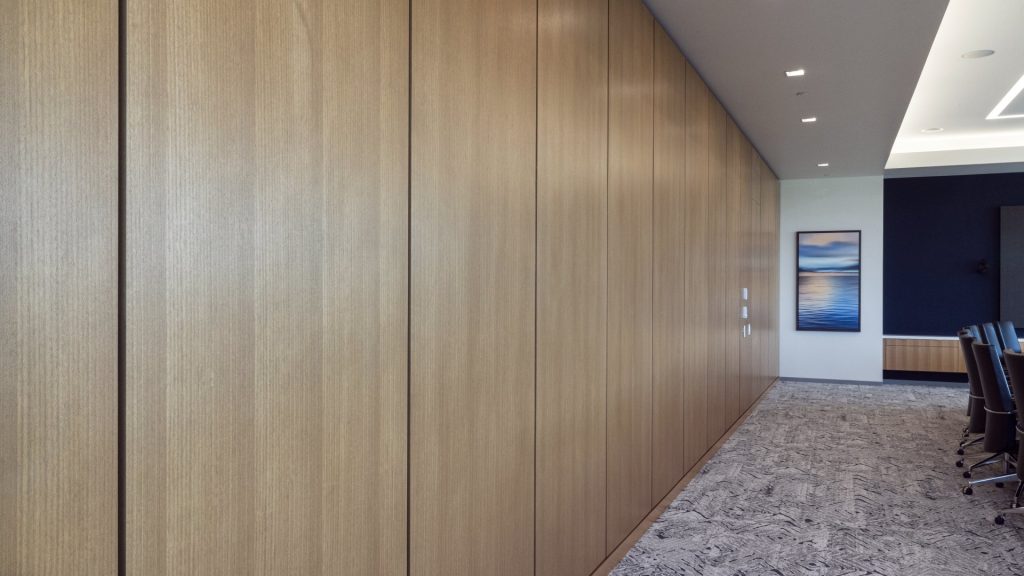
Engineered wood continues to play a central role in sustainable acoustics. When responsibly sourced and combined with acoustic perforation or slotting, it delivers both performance and visual appeal.
Systems such as perforated wood acoustic panels, microperforated wood panels, and perforated metal ceiling panels paired with absorptive backers allow designers to fine-tune acoustic outcomes. Options like wood fiber acoustic panels, FSC wood veneers, and modular ceiling systems further enhance sustainability credentials.
Pre-engineered solutions – including coffered ceilings, linear plank systems, grille ceilings, and decorative beams – help reduce waste through precise fabrication and efficient installation.
Specifying for Circularity & Low Carbon
Sustainability goals must be clearly defined in the specification phase to have a real impact. This includes requiring documentation such as EPD for ceilings, which provides transparency into a product’s environmental footprint.
Effective specifications often include:
- Defined VOC limits to ensure healthy indoor air quality and compliance with green building standards
- Minimum recycled or rapidly renewable content requirements across panels, infill, and finishes
- Documentation such as EPD for ceilings to verify embodied carbon and lifecycle impact
- Clear expectations for design for disassembly so systems can be removed, reused, or reconfigured
- Modular construction strategies that allow ceiling panels, baffles, and wall systems to be replaced without full demolition
- Manufacturers’ take-back or reuse programs where available to support circular material flows
These strategies ensure that acoustic systems contribute to long-term sustainability goals rather than short-term compliance.
Acoustic Performance Without Compromise
Sustainable materials must still meet rigorous acoustic standards. Performance is typically achieved through the interaction between surface treatments and absorptive backers.
Perforation, slotting, and microperforation allow sound waves to pass through the visible surface into the absorptive core. Materials such as recycled cotton, mineral wool, or recycled glass then dissipate the sound energy.
This layered approach enables systems like low-carbon wall panels and ceiling assemblies to achieve higher NRC values without relying on less sustainable materials. It also allows designers to maintain a consistent aesthetic across spaces while tailoring acoustic performance as needed. This is especially important in complex layouts, including baffle ceiling systems and acoustic ceiling clouds, where both acoustic control and visual consistency must be carefully balanced.
Fire Ratings and Durability
Safety and longevity remain essential considerations. Acoustic materials must meet fire performance standards such as ASTM E84, ensuring they contribute to safe building environments.
Durability is equally important. Many natural and recycled materials are engineered to withstand moisture, impact, and regular cleaning. Modular systems also allow for damaged components to be replaced individually, reducing waste and extending system life.
These qualities make sustainable acoustic systems suitable for a wide range of applications, from education and healthcare to commercial and civic spaces.
Bring Your Design to Life With ASI Architectural
The future of acoustics is not defined by a single material or system, but by a thoughtful combination of approaches. From recycled and plant-based infills to engineered wood and metal systems, today’s solutions offer more flexibility than ever before.
ASI Architectural helps design teams navigate these options with systems that balance performance, sustainability, and aesthetics. Whether you are exploring eco-friendly acoustical panels, integrating sustainable ceiling materials, or developing a strategy around circular design ceilings, the right approach starts with informed material selection.
To move your project forward, reach out to request samples, review EPD and VOC documentation, and evaluate acoustic test data. A collaborative design consultation can help identify the best combination of systems to meet your goals – ensuring that sustainable acoustic materials deliver lasting value from concept through completion.