




Using Tongue & Groove Wood Panels for Clean Lines and Quiet Rooms
Designers return to tongue and groove wall panels again and again for one simple reason: they deliver a continuous, classic wood surface that feels intentional, crafted, and timeless. Tight joints, aligned seams, and concealed fasteners create surfaces that read as calm and architectural rather than busy or segmented. Whether used as interior wood cladding on feature walls or as ceiling planks spanning an entire space, tongue-and-groove systems bring order and warmth to modern wood interiors.
It is important, however, to set expectations early. Standard tongue-and-groove linear systems are decorative by design. They are selected for visual continuity, durability, and refined detailing – not for sound absorption. When projects require acoustic performance, ASI Architectural offers purpose-built solutions such as Linear Reveal and Audition that preserve a linear wood aesthetic while addressing wall and ceiling acoustics. Understanding that distinction helps teams specify the right product in the right place, without compromise.
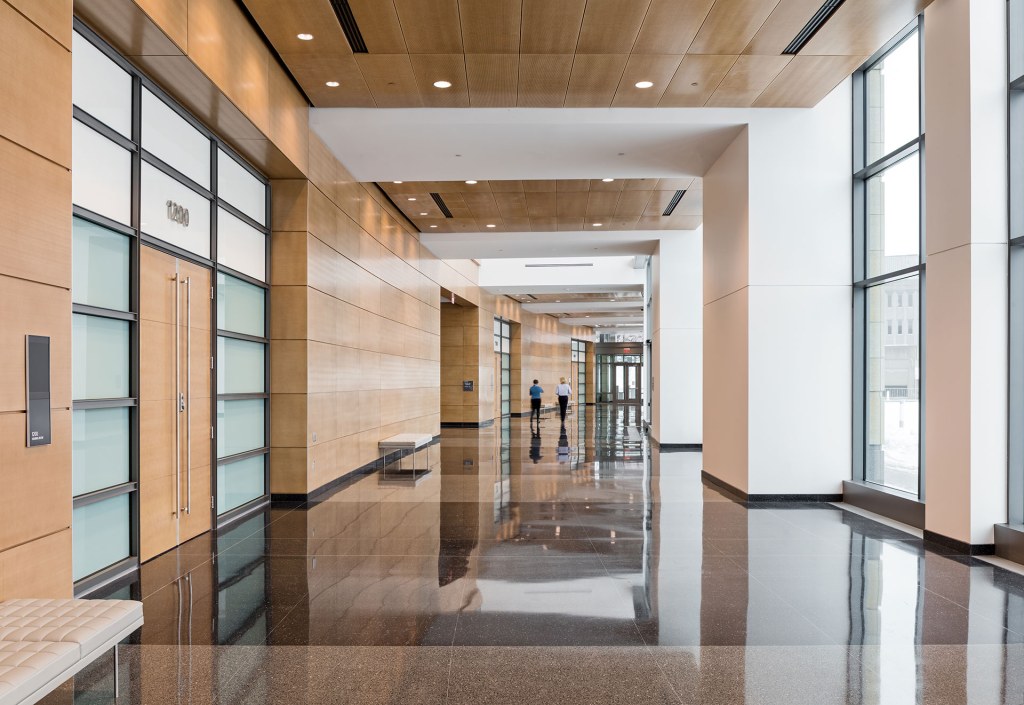
What is Tongue & Groove?
Tongue-and-groove milling is a traditional joinery method where one plank edge is milled with a projecting “tongue” and the adjacent plank edge with a matching “groove.” When installed, the boards interlock, forming a closed-face surface with constant alignment and clean shadow lines. Because fasteners are concealed within the joint, the finished surface appears seamless, supported by a reliable hidden fastener strategy that reinforces the refined look.
This construction creates excellent dimensional stability and allows long runs across walls or ceilings without visual interruption. Architects value tongue-and-groove systems for their precision, flexibility, and compatibility with a wide range of interior conditions, particularly when specifying solid wood ceiling systems with a clean, uninterrupted appearance. ASI’s Linear® systems exemplify this approach, offering predictable installation and a polished finish for both walls and ceilings.
Profiles, Species, and Finishes
Tongue-and-groove profiles are available with square edges or subtle micro-v or beveled edge details that introduce shadow definition without breaking continuity. Typical plank widths range from narrow linear expressions to wider boards, with lengths selected to suit layout and substrate conditions.
Designers can choose from a broad palette of wood species options, including oak, walnut, and ash, each bringing its own grain character and tonal depth. Clear finishes highlight natural variation, while stains provide consistency and coordination with surrounding materials. Low VOC wood finishes are commonly specified to meet indoor air quality requirements, particularly in commercial interiors.

Acoustic Reality Check: T&G Linear is Non-Absorptive
Standard tongue-and-groove linear systems are closed-face assemblies. There is no exposed acoustical path, no perforation, and no designed airflow into an absorptive cavity. As a result, they do not carry an NRC acoustic rating and should not be specified as sound-absorbing materials.
That does not diminish their value. T&G Linear is chosen for its visual clarity, craftsmanship, and durability. It excels where design intent calls for uninterrupted wood surfaces, predictable detailing, and long-term performance. When sound absorption is required, the solution is not to force a decorative system to do a performance job – but to select a system engineered for acoustics from the outset.
Need Absorption? The Two Paths Offered by ASI
For projects that require acoustic control while maintaining a linear wood expression, ASI offers two distinct options.
Linear Reveal is the only linear profile specifically designed to absorb sound. Its open reveal detailing creates a deliberate acoustical path while preserving the rhythm and alignment designers expect from linear wood ceilings and walls.
Audition is ASI’s tongue-and-groove plank with tested NRC acoustic rating. Through precise kerfing and perforation, Audition delivers sound absorption while maintaining the refined look of a plank system, making it a strong option for designers seeking acoustic wood planks without sacrificing visual consistency. It is the only T&G plank in ASI’s portfolio that provides verified acoustic performance.
Depending on aesthetic goals, designers may also consider supportive alternatives.
- MicroPerf® uses microperforated wood panels that appear solid at a distance but absorb sound effectively.
- StrandTec® Wood Fiber offers an inherently absorptive material with a durable, textured finish.
- Grille® systems provide a dramatic wood grille ceiling expression with open-cell geometry and acoustic capability.
Where T&G Linear Shines
Tongue-and-groove linear systems are ideal for spaces where visual continuity and material warmth take priority. Feature walls and ceilings in lobbies, corridors, hospitality venues, and residential interiors benefit from the uninterrupted canopy effect these systems create. In these settings, tongue and groove wood ceiling planks reinforce alignment overhead while delivering warmth and material continuity. Alignment stays crisp, transitions feel intentional, and the wood surface reads as a single architectural element.
In environments where speech clarity or noise control is critical – classrooms, meeting rooms, cafes, or collaborative spaces – designers should transition to Linear Reveal or Audition instead of standard T&G Linear. That approach keeps the wood aesthetic consistent while aligning performance with program needs.
Installation Essentials
Successful installations begin with proper acclimation and humidity control. Wood products should be allowed to adjust to site conditions prior to installation to minimize movement after installation. Clear layout lines and datum references help maintain straight runs across long spans, especially on ceilings.
Fastening patterns should follow manufacturer guidance to ensure secure engagement without telegraphing through the face. Expansion allowances at perimeters and penetrations are essential for dimensional movement. Trim strategies should address terminations, access points, and transitions cleanly, preserving the continuous look without introducing visual clutter.
Where to Use T&G
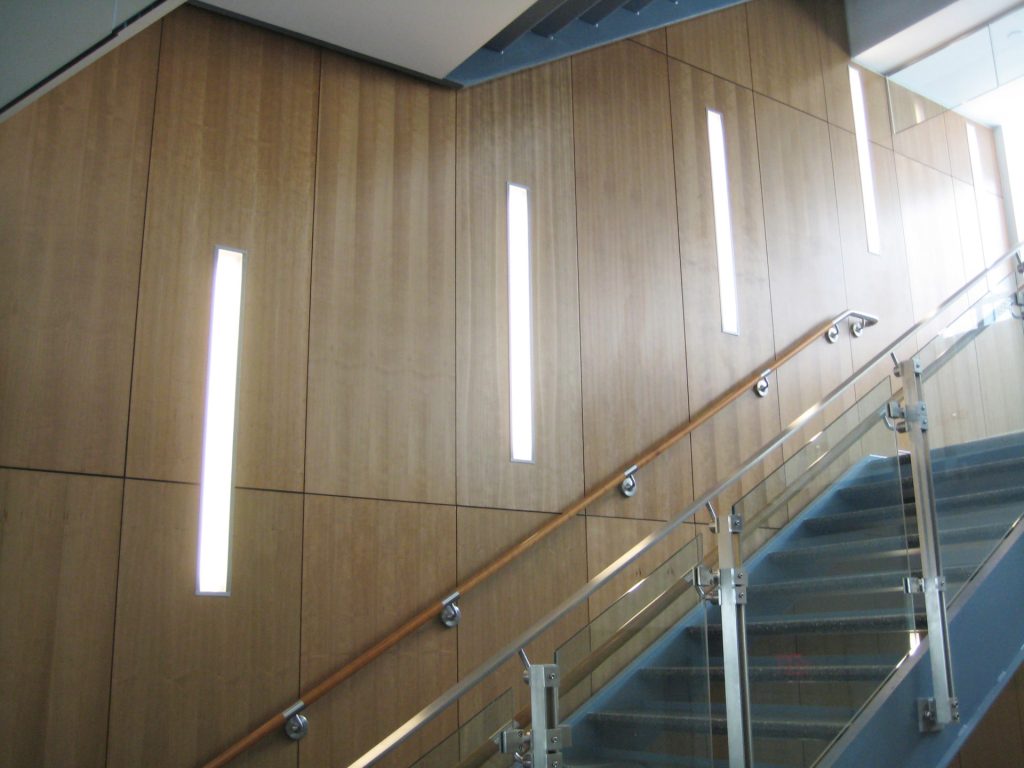
Tongue-and-groove systems appear across a wide range of building types. In hotel lobbies, continuous wood ceilings create a welcoming canopy. In restaurants, they add warmth and visual comfort, often paired with absorptive treatments elsewhere in the space. In classrooms and lecture halls, T&G surfaces provide durability and visual calm when combined with tuned acoustic solutions. Home theaters benefit from wraparound wood paired with absorptive layers behind the scenes. Corridors and stair cores use tongue-and-groove assemblies for impact resistance and long-term durability.
Installation Best Practices on Walls & Ceilings
Careful coordination between trades is key to achieving clean results. Early alignment around layout, intent, ceiling heights, lighting locations, and penetrations helps preserve straight runs and consistent reveals once installation begins. When wood systems are treated as a finish element rather than an afterthought, the final surface reads intentional, aligned, and architectural.
Wall Assemblies
Wall installations often use hat channels or battens to create a flat, consistent substrate. Behind the wood surface, designers may include mineral wool or acoustic felt when performance is required, supported by a wood panel backer where appropriate, with acoustic cavity depth coordinated to meet project-specific sound control goals. Joining staggering helps avoid repetitive patterns and reinforces visual balance.
Ceiling Assemblies
Ceiling installations may be direct-mounted or suspended using hangers or grids, depending on access and service integration needs. Coordination around lighting, sprinklers, and mechanical systems is critical, particularly when addressing ceiling plenum acoustics. Access panels should align with plank layout to remain discreet. Seismic requirements, deflection limits, and straightness checks all factor into successful wood ceiling installation.

Fire, VOCs, and Code Notes
Many projects require fire rated wood panels, achieved through treatments or tested assemblies. Finish selections should meet VOC limits, and submittals typically include fire performance data, finish documentation, and installation details. Early coordination streamlines approvals and avoids surprises in the field.
Care & Maintenance
Tongue-and-groove wood surfaces are easy to live with over time. Regular dusting and occasional wipe-downs with approved cleaners are typically all that’s needed to keep them looking their best. Small dents or surface marks can often be addressed with simple touch-ups, helping the wood age gracefully rather than wear out. Maintaining stable indoor humidity also plays an important role, supporting dimensional stability and preserving the intended appearance long term.
Let ASI Help You Find the Right Wood Treatment
The takeaway is simple. Standard T&G Linear is a design-first solution – beautiful and precise, and non-absorptive, with no NRC acoustic rating. When projects call for sound control, ASI Architectural provides purpose-built options. Choose Linear Reveal for linear absorption. Select Audition when a tongue-and-groove plank with NRC performance is required. Maintain continuous wood surfaces where they matter most, and introduce absorption only where it adds value.
Our team can help with samples, specifications, and layout guidance to ensure tongue and groove wall panels are used effectively from concept through installation – delivering clean lines, confident detailing, and spaces that look as good as they perform.