




Acoustic Risk Points Every Superintendent Should Watch Out For
Acoustic risk points in construction are the stages where a project can drift away from acoustic design intent after the drawings are done and the work starts in the field. The acoustic risk points construction teams need to watch for are the moments when a system can look right on paper but still be built wrong in the real world.
In practice, risks are rarely caused by a single mistake. More often, they appear at predictable points where coordination, installation, or field conditions begin to diverge from the original design. Understanding where those moments occur can help project teams catch problems early.
What are acoustic risk points in construction?
Acoustic risk points are construction stages where sound performance can be weakened by poor coordination, incorrect products, missing backers, field changes, or acoustic panel installation errors. They can occur during submittal review, product substitution, MEP coordination, layout changes, field cutting, installation, and closeout.
Superintendents, contractors, architects, acoustic consultants, product representatives, and project managers all play a role in identifying acoustic risks before they affect system performance.
Why acoustic intent can fail after design approval
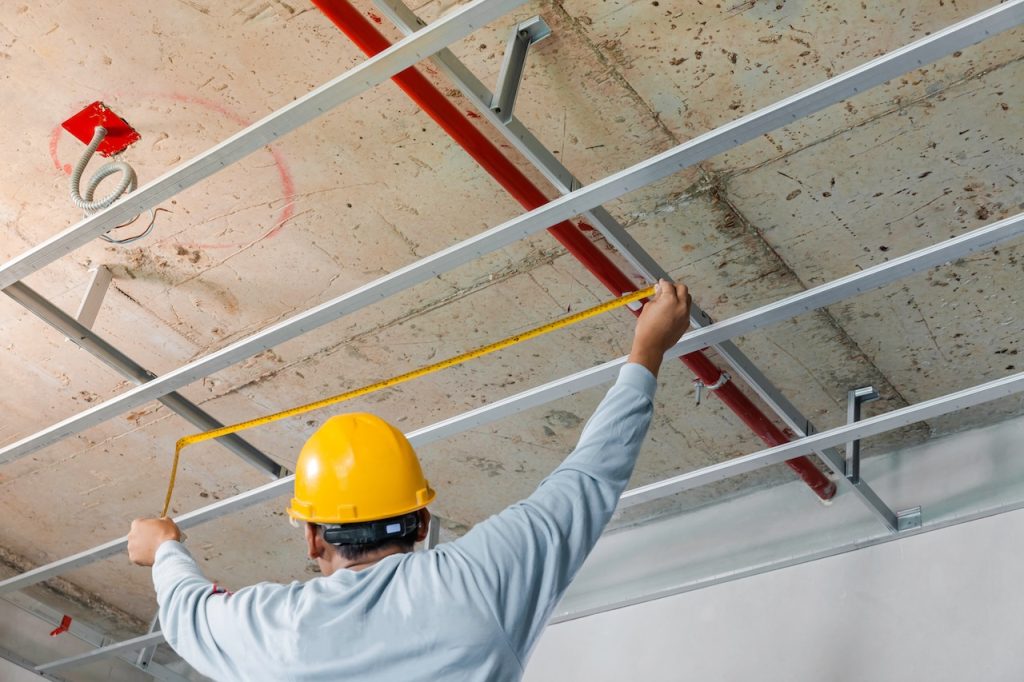
An approved design is not the same thing as a successful acoustic installation. A set of drawings can be complete, a submittal can be stamped, and products can be ordered correctly, yet the finished space can still miss the mark.
That’s why the acoustic risk points construction teams manage are so important.
ASI’s contractor guidance is built around a simple idea: acoustic design intent has to be carried all the way through field execution so the specified performance is the acoustic performance construction teams actually deliver.
Risk point 1: vague or incomplete acoustic submittals
Submittals should do more than move paperwork through the project team. When they are treated like admin work instead of technical review, details get missed and the project starts to drift.
The biggest gaps are usually in the system details that determine how the assembly is built and performs.
| Submittal item | Why it matters | Risk if missing |
| NRC rating | Shows sound absorption performance | Team cannot confirm performance intent |
| Acoustic backer | Often determines absorption | Finished system may underperform |
| Mounting method | Affects fit and performance | Wrong assembly may be installed |
| Perforation pattern | Affects how sound enters the system | Visual match may not equal acoustic match |
| MEP coordination | Protects layout and coverage | Field cuts may remove acoustic material |
Risk point 2: product substitutions that look similar but perform differently
Value engineering can help a budget, but it can also create acoustic problems when substitutions are reviewed only for cost or appearance. Two products can seem close enough on paper and still behave very differently once installed.
Changes in materials, perforation patterns, mounting methods, test data, or fire ratings can alter performance in ways that are easy to overlook. The simplest rule is worth repeating: if the assembly changes, the acoustic performance may change.
Risk point 3: missing acoustic backers
Backers are easy to overlook because they are hidden behind the visible finish. That makes them one of the most common acoustic risk points construction teams miss until it’s too late.
A backer helps support sound absorption, so an omitted backer can reduce performance even when the front face looks perfect. Backers need to be shown in submittals, reflected in acoustic shop drawings, and confirmed before installation starts. Field teams should also verify that the delivered backer matches the approved system.
| Backer issue | Construction cause | Acoustic result |
| Backer omitted | Installer does not see it in the drawings | Lower absorption |
| Wrong thickness | Substitution or ordering error | NRC may not match intent |
| Backer interrupted | MEP penetration or field cut | Uneven performance |
| Wrong material | Cost change or unclear spec | Fire rating or absorption may change |
| Poor fit | Field dimensions not checked | Gaps and inconsistent coverage |
Risk point 4: MEP penetrations and ceiling conflicts
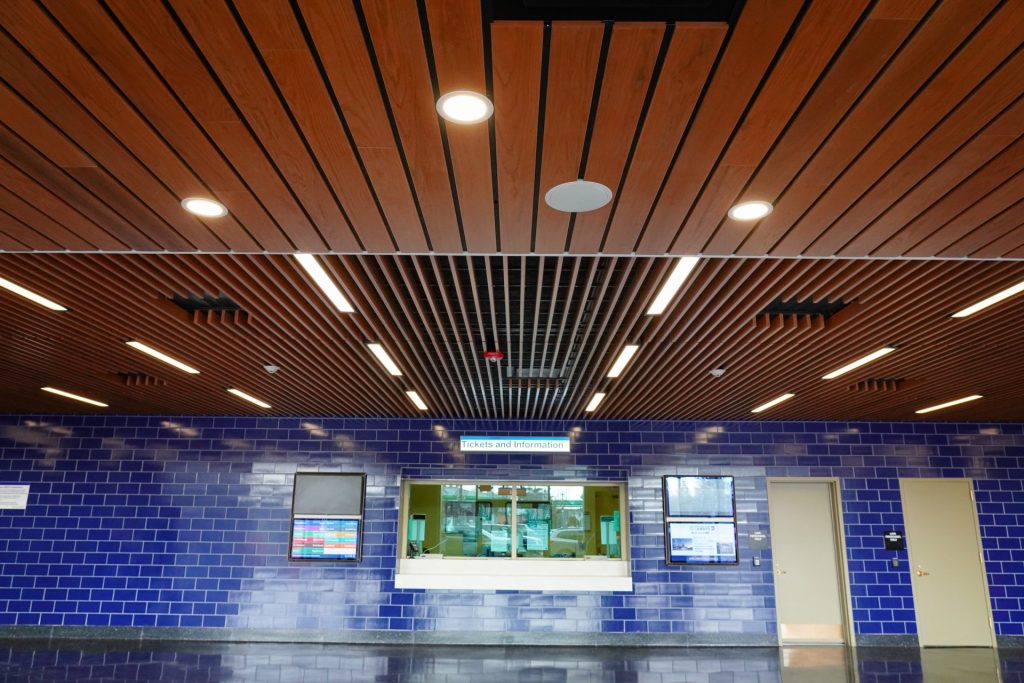
Many acoustic installation risks happen where systems meet. That is especially true with acoustic ceiling systems, where lighting, mechanical, fire protection, and other building systems all compete for the same space. Any penetration through an acoustic system should match the coordinated drawings or be reviewed before cutting. Once field cuts start, the acoustic treatment can lose coverage fast.
Read More: MEP Noise Control for Better Building Acoustics
Risk point 5: layout changes in the field
A layout change can seem harmless when the crew is solving a site issue, but it can quietly change the whole acoustic plan. Moving acoustic wall panels, clouds, baffles, or wall treatments can shift coverage away from the areas that need control most.
With any of these changes, the result is often less absorption and weaker reverberation control where the design expected more coverage.
| Field change | Why it may seem harmless | Why it can hurt acoustics |
| Moving panels for visual alignment | Looks cleaner | Leaves high-reflection zones |
| Reducing baffle quantity | Saves material | Less absorption in large rooms |
| Cutting around fixtures | Solves a site conflict | Removes acoustic coverage |
| Changing panel orientation | Fits field dimensions | May affect performance or appearance |
| Skipping edge details | Speeds installation | Creates gaps and weak transitions |
Risk point 6: tolerances, gaps, and perimeter conditions
Small details can create big differences in the finished space. Transitions, perimeter conditions, and other construction tolerances can influence both appearance and acoustic performance, especially where gaps and uneven transitions can create weak points in the finished system.
Risk point 7: installation sequencing
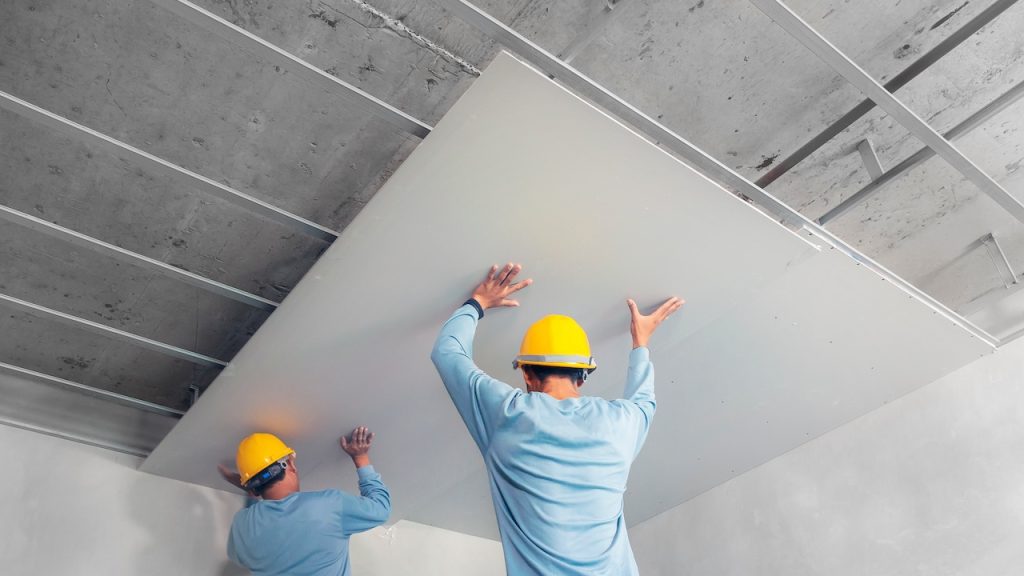
Even the right product can be compromised if it is installed at the wrong stage. Completing acoustic ceiling installation before overhead work is finished can create avoidable damage. Panels stored in poor conditions can warp or get dirty. Mechanical work can force rework in finished acoustic zones. Ensuring proper installation sequencing helps protect both appearance and function.
| Construction stage | What to check |
| Before fabrication | Confirm dimensions, submittals, backers, and approved layout |
| Before installation | Confirm MEP penetrations, substrate, access needs, and site readiness |
| During installation | Check spacing, mounting, backers, and field cuts |
| After installation | Inspect gaps, damage, alignment, and acoustic coverage |
| Before closeout | Confirm the installed system matches approved documents |
Superintendent checklist for acoustic risk control
✅ Compare current drawings with approved shop drawings – Make sure crews are working from the latest layout, not an outdated version.
✅ Confirm product and system type – Verify the correct materials, mounting method, and acoustic system before installation begins.
✅ Confirm acoustic backers – Backers help preserve the intended sound absorption and system performance.
✅ Review NRC data where required – Confirm the product supports the acoustic performance target for the space.
✅ Check MEP penetrations before cutting – Coordinate penetrations early so panels are not cut, shifted, or reduced in ways that weaken coverage.
✅ Verify field dimensions – Field measurements help reduce gaps, misalignment, poor fit, and last-minute cutting.
✅ Protect finished panels from damage – Keep installed panels clean, dry, and protected to avoid rework or visible finish issues.
✅ Review substitutions before approval – Confirm alternate products meet the same acoustic, visual, and installation requirements.
✅ Bring in product experts when details are unclear – Use manufacturer or product representative input to reduce guesswork and improve field coordination.

When superintendents should pause and ask for review
Not every field change creates an acoustic problem, but some changes deserve a second look before work continues. When delivered materials do not match the approved submittal, dimensions differ from the shop drawings, or crews need to cut around new fixtures, it is worth confirming that the original design intent is still being maintained.
The same applies to substitutions, relocated wall or ceiling treatments, and MEP conflicts that require adjustments in the field. Most acoustic problems are not caused by major mistakes. They result from a series of small decisions that seem harmless individually but gradually reduce treatment coverage or change the performance of the system. A quick review at the right time can prevent those issues from becoming expensive corrections later.
How better coordination protects acoustic performance
Acoustic performance depends on much more than the products themselves. It relies on the connection between specification, submittals, coordination, fabrication, installation, and closeout. When those pieces stay aligned, commercial acoustic systems are far more likely to perform as intended.
For superintendents, protecting acoustic performance is really about protecting that chain of coordination. The goal is not to eliminate every field change, but to make sure changes are reviewed before they affect the finished space. When those reviews happen consistently, many acoustic risk points construction teams encounter can be identified early, reducing rework and protecting the performance envisioned during design. That is especially important when dealing with acoustic treatment for large rooms, where even small changes can affect overall results.
FAQs
What are acoustic risk points in construction?
They are project stages where sound performance can be weakened by poor coordination, field changes, missing backers, substitutions, or installation errors.
Why can acoustic performance fail during installation?
Even when the design has been approved, acoustic risk points can affect construction acoustics and prevent the system from achieving its intended performance.
What should superintendents check before acoustic panel installation?
Submittals, backers, dimensions, MEP coordination, and approved shop drawings.